
You searched for "Implant"
The history of person-centred hearing care
In the World Report on Hearing, launched by the World Health Organization (WHO) on 3 March 2021, the use of person-centred care is highly recommended. In this article, we learn about the history of person-centred healthcare and hearing care. But...Utilisation of cortical auditory evoked potentials in the paediatric population
Introduction Early identification of hearing loss in infants followed by prompt intervention is well established as the key to maximising the development of speech, language and psychosocial skills. Many countries have already adopted early hearing detection and intervention (EDHI) programs,...
Do you feel me? Emotional processing post-traumatic brain injury
Traumatic brain injury (TBI) accounted for just under three million accident and emergency admissions in the US in 2013, with common causes including falls, traffic accidents and assaults. Difficulties processing and expressing affective communication is a common sequela of TBI...
Quick and valid: a new measure of aphasia
Aphasia can be caused by a stroke, brain injury or dementia. It is defined as a language disorder that impacts the domains of speaking, understanding, reading and writing. Given the impact on quality of life and conversation, there is a...
Audiology and COVID-19
COVID-19 affected all clinical services in a very short time, including audiology. This service improvement investigation concentrated on how audiology services in the UK were impacted by the virus and how perception of tele-audiology changed. About 120 practising audiologists were...
Not to be mis-underestimated
It is a very rare occurrence to find a paper looking at NF2 and the auditory system. There seems to only be a couple on NF2 prevalence in the population, so this is unsurprising. As far as I can recall...Mapping the financial and disease burden of hearing loss and associated interventions
The prevalence and burden of ear and hearing disorders is huge and, historically, has been underappreciated. Globally, unaddressed hearing loss poses a growing public health challenge, requiring urgent attention from policymakers, health professionals and civil society. The recently published World...Mapping the financial and disease burden of hearing loss and associated interventions
The prevalence and burden of ear and hearing disorders is huge and, historically, has been underappreciated. Globally, unaddressed hearing loss poses a growing public health challenge, requiring urgent attention from policymakers, health professionals and civil society. The recently published World...
What are the consequences of facial palsy on working life?
Facial palsy (FP) has multiple causes, including iatrogenic or idiopathic paralysis, trauma and tumours. Whilst for certain aetiologies, such as Bell’s palsy, recovery of function is expected, many patients will experience permanent symptoms due to incomplete recovery of the facial...Neuxmed is now the exclusive UK and Ireland partner for Orlvision, a leader in German-designed and manufactured endoscopy systems
“At Neuxmed, our mission is to empower ENT specialists and speech and language therapists with innovative, reliable, and clinically proven endoscopic solutions,” says Michael Davies, MD at Neuxmed. “With over 12 years of experience in flexible endoscopic diagnostics, our team...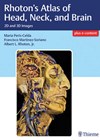
Rhoton’s Atlas of Head, Neck, and Brain
Albert Rhoton was a renowned American neurosurgeon with an intense interest in anatomy. This book was published after his death in 2016 and aims to continue Rhoton’s philosophy of patients benefit deriving from surgeons’ knowledge and understanding of complex anatomy....


