You searched for "screening"

Posturography in persistent postural-perceptual dizziness (PPPD)
Those in neuro-otology practice will be familiar with PPPD now appearing in the forthcoming beta edition of ICD-11. This condition combines the symptoms of phobic postural vertigo and chronic subjective dizziness in which anxiety plays a part. The underlying hypothesis...
Suspect the unsuspecting in thyroid cancer
This article reminds readers of how often invasive thyroid disease can appear, as the symptomatology is minimal. Noticeable airway symptoms appear after 50% of the airway is involved and surgeons can often fall in the unsuspecting trap of discovering locally...
Application of paper patching in patulous eustachian tube
The condition of patulous eustachian tube, as opposed to dysfunctional eustachian tube, is less frequently diagnosed. Symptoms related to this, such as autophony, aural fullness, ‘being under water’, ‘hearing their own breathing’, and hearing sensitivity (varying in either direction) can...Whale hearing tests through evoked potential audiometry
Covering over 70% of the earth’s surface and reaching known depths of 11km, the world’s oceans tick the box for an extreme environment. What do we know of the impact of environmental noise on the deep-sea dwellers of this habitat?...
Climate change and global health
As we put together the Editors’ Choice for Jul/Aug 2022 Journal Reviews, news from a meeting of the G7 energy and environment ministers has been shared that the G7 countries are to stop public funding of any overseas fossil fuel...
Which self-reported tinnitus and hyperacusis questionnaires are useful?
Tinnitus and hyperacusis may have very negative psychological side-effects. Due to their subjective nature it is important to have appropriate tools to assess them. In addition to the routine questionnaires such as THI, HQ, ISI, HADS or VAS, the authors...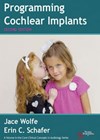
Programming Cochlear Implants - Second Edition
Wolfe and Schafer open their second edition with up-to-date images of brand-specific devices and show various configurations and customisations available to the recipient. For the audiologist, they introduce highly relevant topics such as polar plots for microphones, array types and...
Listening in noise to predict learning disability
Noise disrupts the neural coding of consonants more than vowels. Listening in noise presents a challenge for everybody, but particularly to children whose language skills are underdeveloped. This team views background noise as a disruption to the necessary neural mechanisms...
Hurdle jumping
This article deserves a little attention, rather like settling into conversation. As the writers state, listening is an effort and is a tricky field of study when combining multiple physiological measures. In order to gain an understanding, they suggest: consider...
Starry eyed?
Attentive listening and active listening skills suggest that eye movement is an important factor in subject engagement. Indeed, when asked, AI suggests gaze is held for 70% of the time when listening. Although the route of this percentage is unclear,...