You searched for "study"
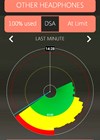
How loud is too loud? Smart ways to monitor noise exposure through your headphones
As an audiologist, an increasingly common concern patients have is noise exposure from their headphones and how it will impact their hearing over time. It’s a legitimate worry considering the average adult is streaming audio content on their mobile devices...Prednisolone and/or acyclovir for Bell’s palsy
Landmark Paper: Sullivan FM, Swan IRC, Donnan PT, et al. Early treatment with prednisolone or acyclovir in Bell’s Palsy. N Engl J Med 2007;357(16):1598-607. Facial nerve paralysis as a consequence of Bell’s palsy can result in devastating long-term effects on...Patient experience of necrotising otitis externa
Necrotising otitis externa is increasing in incidence in the UK and becoming a rising burden to patients and health services. Despite a growing body of literature on this condition, we know very little about patient experience of necrotising otitis externa....Andreas Wagner: ESPO 2025 keynote speaker
The keynote speaker for ESPO 2025 in Stuttgart is renowned evolutionary biologist and author Professor Andreas Wagner, from Zurich. Prof Wagner will focus on the congress theme of ‘Innovation’, giving us his unique perspective on how evolution drives human creativity....Andreas Wagner: ESPO 2025 keynote speaker
The keynote speaker for ESPO 2025 in Stuttgart is renowned evolutionary biologist and author Professor Andreas Wagner, from Zurich. Prof Wagner will focus on the congress theme of ‘Innovation’, giving us his unique perspective on how evolution drives human creativity....The art of hearing: a conversation between silence and colour
The image on the ENT & Audiology News September/October 2025 cover is not merely an artwork – it is a conversation. A conversation in colour. A dialogue between silence and sound, between science and emotion. It is part of a...An audiologist abroad
Ever thought of working abroad? In this issue we hear from Caroline Hudson, International Audiologist with special interest in paediatrics and research, who took the leap to work in Canada after qualifying and working in the UK. She will provide...The emergence of in-office ventilation tubes for the treatment of otitis media in children
In-office tympanostomy tube systems offer a quicker, anaesthesia-free alternative to traditional surgery for children, with promising outcomes and reduced costs. Tympanostomy tube or grommet insertion is the most common surgery performed on children worldwide. Whilst a relatively short and straightforward...
Is there increased cardiovascular risk with macrolide antibiotics?
This month’s Ed’s Choice delightfully reviews the potential cardiovascular consequences of long-term macrolide use in the treatment of chronic rhinosinusitis. This used to be one of my ‘go-to’ topics of conversation at home after a bad day at work, although...
Dupilumab prospective RCT for CRSwNP, a multinational trial of 60 patients with a 16-week CT follow-up
This transcontinental work describes a randomised, double blind, placebo controlled parallel group study over a 16-week period, assessing 60 patients with CRSwNP by CT scan scores. All patients had a four-week period of intranasal corticosteroids followed by randomisation to add...
A therapeutic algorithm for tracheoesophageal periprosthetic leakage
Tracheoesophageal voice prosthesis leakage can be intravalvular (more common) or periprosthetic (focus of this study). The authors studied the causes of periprosthetic leakage among 115 patients attending for voice prosthesis management (1374 clinic attendances) treated between December 2014 to December...