
You searched for "instruments"
VES2 is ready to bring ear surgery into your living room
The VES2 virtual reality bone drilling simulator is ready and it is freeware! After a long development period we are now able to invite everybody to try the simulator and use it for training, for a inner ear anatomy, and...Training in the use of medical devices – how should it be done?
Adequate training in novel medical devices is imperative, not only to ensure patient safety, but also to give clinicians the confidence to use the device in question. In this article, Andrea Gillies explains the philosophy of one of the equipment...Skull bone reconstruction using 3D-printed titanium implant
ENT surgeons’ role in advanced skull base resection and reconstruction continues to grow; this article explores how 3D printing aids planning and repair of complex defects. The integrity of the craniofacial skeleton is essential for both functional and aesthetic reasons....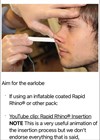
On-call ENT apps
ENT apps for trainees are few and far between. Here are a couple of them which could be useful for the on-call. ENTSHO.com Born out of the website with the same name, this app is a must-have if you work...Screening for hearing loss in primary care
Hearing impairment is one physical disability that is increasing in prevalence in society in general, and in older adults in particular. Approximately 34 to 36 million Americans report suffering from some degree of hearing impairment with the number rising to...Drug side-effects on audiological and vestibular testing
Are they a malingerer? Or perhaps they are inattentive? It may be their drugs! Robert DiSogra considers the side-effects of medication on the test subject. The audiogram serves many purposes in clinical practice. For the audiologist, it helps to differentiate...
Heard That: does the app live up to its name?
Ever find yourself in a noisy restaurant, barely following conversation yet nodding in clueless agreement? Considering how loud social settings can be, this is likely a familiar scenario. As gatherings become a regular part of our lives again, so do...HearAdvisor’s scientific and consumer-friendly approach to evaluating hearing aids
An ageing population means more hearing aid users. The authors of this article describe their techniques for independently assessing prescription and over-the-counter hearing aids in an acoustic laboratory. As the role of consumers in the hearing aid purchasing decision continues...


