You searched for "infection"

Two for the price of one - multiple parotid neoplasms
With advancing years come many benefits, but one drawback is the acquisition of parotid (or thyroid) neoplasms. Conventional teaching is that most are benign and slowly enlarge, and not infrequently are found bilaterally as in Warthin’s. Pleomorphic adenomas are also...Developing principles of swallow rehabilitation using novel animal modelling
Never let it be said that we don’t cover a wide range of topics. Camilla Dawson tells us about the crossover between swallowing in seals and in humans. Rehabilitation of swallow is complex, informed by anatomical and physiological systems and...From surgeon to scholar: the remarkable life of Philip Stell
Professor Philip Stell was an extraordinary man: following an astonishingly illustrious career in ENT, he excelled as a medieval historian. With the Philip Stell Prize due to be awarded in May, his friend Pat Bradley looks back at his remarkable...Thyroid cancer – the last decade
Professor Ashok Shaha describes the evolution in the treatment of thyroid cancer that he has witnessed over the last decade and the invaluable progress made by himself and others, from their contributions to staging systems and guidelines. Nuances and paradigm...
Remote consultations: bringing ENT in to the 21st century
The ongoing peaks and troughs of the COVID-19 pandemic have imposed unprecedented challenges on day-to-day healthcare provision that we all took as given across the globe prior to spring 2020! The pandemic has, in many ways, made us push boundaries...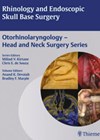
Rhinology and Endoscopic Skull Base Surgery
Having recently acquired a post-CCT Rhinology and Skull Base fellowship, I am eternally grateful to the good folk at ENT & Audiology News for this most recent book review opportunity! The book should suit most higher-level ENT trainees through to...In conversation with George Browning, author of Browning’s Audiology for Clinicians
Professor George Browning. It is one of those superbly bright August mornings in London’s West End. It gives Lamb’s Conduit Street, where I’m meeting George Browning, an almost timeless feeling. The café we meet at is bustling and noisy, and...In conversation with George Browning, author of Browning’s Audiology for Clinicians
Professor George Browning. It is one of those superbly bright August mornings in London’s West End. It gives Lamb’s Conduit Street, where I’m meeting George Browning, an almost timeless feeling. The café we meet at is bustling and noisy, and...In conversation with Professor Erwin Offeciers: The countdown to BACO 2015 continues
The countdown to BACO 2015 continues Scientific Programme Planner, Professor Shak Saeed, catches up with Keynote Speaker, Professor Erwin Offeciers, who talks about the vital balance between evidence-based medicine and experience-based knowledge. We hear he unwinds by playing piano and...