
You searched for "smoking"
An audiologist abroad
Ever thought of working abroad? In this issue we hear from Caroline Hudson, International Audiologist with special interest in paediatrics and research, who took the leap to work in Canada after qualifying and working in the UK. She will provide...Who’s minding the gap?
In this article we focus on minding the gap between education and clinical audiology for children and young people who are deaf (CYPD) and their families, through interprofessional education. This article is provided by Dr Joy Rosenberg who leads the...Hearing loss and cognition: something to think about
Irace, Chern and Golub propose causal and non-causal mechanisms for the links between hearing loss and dementia, concluding with a discussion of several proactive measures available to help preserve neurocognitive health in older adults with hearing loss. What is age-related...
Management of infantile haemagiomas of the airway
This paper reviews the diagnosis and management of infantile haemagiomas (IH) affecting the airway. Approximately half of infants with this condition would also have cutaneous haemagiomas which are usually in the beard distribution. IH could affect any parts of the...
Lockdown has been bad for children, but it might mean they don’t need surgery anymore
Our editor’s choice for this edition reviews an article looking at the effects of lockdown on symptom prevalence in children with adenotonsillar diseases. In this unprecedented COVID-19 era that we are all living and working in, risk assessment has taken...Migration and training: a British-Nigerian surgeon’s perspective
Less than 4% of doctors on the UK’s medical register describe their ethnicity as African or part African, yet there are myriad driving forces behind the migration of medical trainees from Africa to the UK and other developed countries. Ekpemi...
Improving the temporal contour in reconstruction
A feature of the temporalis flap is the sunken contour left behind. This group from Japan present a variation for filling defects for which we would traditionally use a temporalis muscle containing. The laterally based peri-cranial flap they present uses...Microneedles enable inner ear precision medicine
Developing safe, reliable and efficient ways to deliver therapeutics into the cochlea is a key challenge. In this article, the authors share their work to develop microneedles to address this challenge. The era of precision medicine of the inner ear...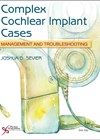
Complex Cochlear Implant Cases – Management and Troubleshooting
When working with cochlear implant (CI) recipients who are not responding as well as expected or their case incorporates new challenges for the audiologist, the common response is a quick panic, closely followed by a question: what do we do...


