
You searched for "Training"

Rib grafts for mandibular reconstruction
Reconstruction of the mandible following ablation requires good bone stock to allow optimal function and the placement of dental implants. In the developed world, vascularised bony flaps are accepted as the gold standard but these may not be widely available...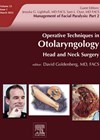
Facial reanimation dynamic trends
Facial nerve paralysis leads to functional loss and aesthetic issues. Several techniques are used to restore function and to improve cosmesis. The gold standard is dynamic facial reanimation. Typically, the masseteric, hypoglossal, and contralateral facial nerve branches have been used...Enhancing and extending hearing care using Ida Telecare
Tele-audiology has been on our radar for a long while, and evidence shows that its application in clinical practice is beneficial to both patients and clinicians. Cherilee Rutherford discusses the benefits and gives an overview of the freely-available tools developed...
ENT Board Prep
ENT Board Prep by F Lin and Z Patel is an extremely comprehensive revision guide that covers all topics relevant to the American Board of Otolaryngology exam. UK trainees will undoubtedly also benefit with respect to the FRCS exam, given...Psychogenic vestibular disorders: understanding and management
‘Psychogenic vestibular disorders’, also known as ‘functional vertigo and dizziness’, are common causes of dizziness and balance difficulty. Although our understanding of their underlying pathophysiology remains incomplete, Drs Diego Kaski and Amy Edwards outline how early identification and positive diagnosis...When things go wrong
The new-age, Paediatric Surgeon, Ray Clarke, (fear uasal, íseal), eloquently demands throwing off the shackles of the past and welcomes the dawning of an era of openness, transparency and candour, preferably suffused with compassion for both the patient and the...Audiology in this issue... The Changing World of Computational Audiology
Deborah Vickers, PhD, Principal Research Fellow in Hearing & Deafness, University of Cambridge, UK. E: dav1000@cam.ac.ukTwitter: @SOUNDLabCam / @DebiVickers_ / @BEARS_CIwww-neurosciences.medschl.cam.ac.uk/sound-lab/ Lorenzo Picinali, Reader in Audio Experience Design, Imperial College London, UK. E: l.picinali@imperial.ac.uk ENT & Audiology News Jan/Feb 2022...Acupuncture for tonsillectomy pain in children
The challenge: tonsillectomy pain Tonsillectomy is a uniform surgical insult which results in a 10-day recovery for children. Severe pain can occur which can give rise to poor oral fluid intake, dehydration and potentially the need for intravenous fluid resuscitation....Physician illness
Getting in the zone, recognising our personal stress limits and looking after ourselves are vital components in our efforts to stay healthy advises Abbie Lane, after almost a generation of de-stressing others. They say a rugby player like Brian O’Driscoll...Call to enter WHO Film Festival
Submissions for the fourth edition of the Health for All Film Festival (HAFF) are open until 31 January 2023. Run by the World Health Oganisation (WHO), the HAFF celebrates the art of short films as a means of raising awareness of global health issues.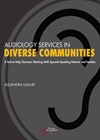
Audiology Services in Diverse Communities: A Tool to Help Clinicians Working With Spanish-Speaking Patients and Families
As a bilingual audiologist (Spanish-English), I have found this book to be a bridge between the two languages in the audiological world. It is a resourceful niched book that enables the practising audiologist dealing with Spanish-speaking adult and paediatric patients...


