
You searched for "laryngeal"
Guidelines on COVID-19 published by Asia Pacific Laryngology Association (APLA)
Due to a vast geographical spread with diverse socio-economic conditions in the Asia Pacific countries, APLA Founding Chair, Vasant Oswal, President, David Lau, and Secretary, Vyas Prasad decided to publish guidelines on COVID-19 in the form of an ‘International Consensus',...Retrieval of an aspirated voice prosthesis in the awake laryngectomised patient
In this article, the authors describe a simple and effective technique for extracting an aspirated voice prosthesis from within the tracheobronchial tree in the awake laryngectomised patient using the Ambu® aScopeTM 4 Broncho endoscope. Surgical voice restoration remains the dominant...Developing principles of swallow rehabilitation using novel animal modelling
Never let it be said that we don’t cover a wide range of topics. Camilla Dawson tells us about the crossover between swallowing in seals and in humans. Rehabilitation of swallow is complex, informed by anatomical and physiological systems and...In conversation with Chadwan Al Yaghchi - Cutting Edge Laryngology 2019
Chadwan Al Yaghchi is a founding member of the British Laryngological Association and served on the council since 2013. He is currently the associate honorary treasurer. How did the idea for Cutting Edge Laryngology come about? 2010 was a time...
Benefit of prolonged voice rest following phonosurgery
The recommendation for voice rest following surgery is not agreed amongst surgeons, regarding either the type of voice rest (absolute or relative) or the optimal duration. In this ongoing study, 31 elective patients operated on for benign laryngeal lesions were...
Medication and its effect on the larynx
This article summarises different medications and their effect on the voice. A growing number of patients we see in clinic are on multiple medications that could affect vocal cord function. The author summarises different classes of medications and their potential...Call to action: dysphagia matters
Dysphagia profoundly impacts quality of life. Multidisciplinary research, like the POuCH study, aims to improve understanding, diagnosis and treatment. We take for granted the simple joys of life – meeting over a cup of coffee, breaking bread with friends or...Monkey business
Professor Sir Donald Harrison (DFNH) had a strong interest in comparative anatomy of the larynx, which was supported by a close relationship with the London Zoo who provided specimens from any mammals in the collection that died and had undergone...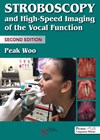
Stroboscopy and High-Speed Imaging of the Vocal Function – Second Edition
When I was asked to review this book, I was really looking forward to receiving it and eagerly awaited the postman on a daily basis until it arrived. Needless to say, it did not disappoint. The author, Peak Woo, is...Intraoperative nerve monitoring: 2017
Having written the definitive text on laryngeal nerves, Gregory Randolph and Dipti Kamani describe the benefits of intraoperative neural monitoring and, importantly, how to proceed if the nerve is pathologically involved or there is loss of signal. Over the years,...Changing perceptions in head and neck cancer management caused by quality of life issues
Sir Felix Semon was an outstanding clinician and exceptional laryngologist. The money raised by donations from his colleagues on his retirement in 1909 was used to establish the London University’s Semon Lecture. Semon’s Obituary in the BMJ, reads: “In Semon's...


