You searched for "career"
Specialist teams deliver world-class trauma care
University Hospitals Birmingham NHS Foundation Trust runs the Queen Elizabeth Hospital Birmingham, which is a designated Major Trauma Centre. The Trust holds the contract to treat all UK injured military personnel evacuated from combat zones overseas. More than 1200 of...From the editor May/Jun 2024
Declan Costello, MA, MBBS, FRCS(ORL-HNS),Consultant Ear, Nose and Throat Surgeon, Wexham Park Hospital, Slough, Berkshire, UK. E: d.costello@nhs.netTW / X: @Voicedoctor_uk One of the privileges of editing this magazine is interviewing senior figures within our specialty; so, it was wonderful...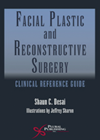
Facial Plastic and Reconstructive Surgery – Clinical Reference Guide
This book is an excellent pocket guide encompassing a wide range of facial plastic and reconstructive surgery. It is formatted in a very similar way to the well-known Otolaryngology and Head and Neck Surgery by Pasha. The book is organised...
Salivary Gland Neoplasms
Salivary Gland Neoplasms is another useful addition to the Advances in Otolaryngology series. This issue (Vol 78) sees Prof Patrick Bradley (Nottingham) and David Eisele (Baltimore) co-edit a 206-page edition, nicely divided into 23 chapters, covering basics like molecular pathology,...
Clinical Manual of Otolaryngology
This book aims to fill the gap that many ‘generic clinical textbooks’ fail to address; the knowledge and skills required to deal with common ear, nose and throat conditions that present to general practitioners and in emergency departments. Its scope...
Big Data In Otolaryngology
The future is now and, in my opinion, this consists of artificial intelligence, robotics, and data. Why is data important? This is a rhetorical question as you will have guessed; however, it can help improve individual and collective care, speeding...
Alive - an alternative anatomy
Gabriel Weston studied English as a first degree, and then trained in medicine. She entered an ENT registrar training programme and was then offered a book deal, so continued her clinical practice whilst writing. She subsequently appeared extensively on BBC...
Helicobacter pylori and chronic tonsillitis
Helicobacter pylori infection in the stomach has long been associated with chronic gastritis, duodenal and peptic ulceration and even gastric cancer. Whether laryngopharyngeal reflux (LPR) brings up these organisms and induces chronic tonsillitis is an interesting concept, which the authors...
Risk of malignancy in non-diagnostic thyroid FNACs
Thyroid nodules are present in between 21-68% of the general population. The evaluation of these nodules to exclude thyroid carcinoma includes fine-needle aspiration cytology (FNAC) and a non-diagnostic cytology result occurs between 8-20% of the time. This retrospective cohort study...
Role of intranasal steroids after radiotherapy for nasopharyngeal carcinoma
Rhinosinusitis often follows radiotherapy in the treatment of carcinoma of the nasopharynx. The interval and severity may vary with the dose of radiation and stage of the carcinoma. In this randomised, controlled study, patients who developed rhinosinusitis after radiotherapy treatment...
Papillary thyroid cervical metastases usually remain stable for years
Most patients with papillary thyroid carcinoma (PTC) have excellent disease-specific survival (DSS). Even with lymph node metastatic recurrence, the 10-year survival is 85%, and 15-year survival 73%. There is a growing trend of minimising morbidity in differentiated thyroid carcinoma (DTC)...