
You searched for "meetings"
Matthew Yung and Chris Raine Travelling Scholarship to Iowa
I was the grateful recipient of the 2020 Matthew Yung and Chris Raine scholarship, although due to the Covid pandemic and its aftermath I could not take up the opportunity until June this year. I chose to visit the otology and neurotology department at Iowa University Hospitals, in particular to meet with Bruce Gantz, an early adopter of bony obliteration of the mastoid, himself inspired by the work of Ulf Mercke of Sweden who developed this technique in the 1980s.The sound of music for adult cochlear implant recipients
Dr Valerie Looi has dedicated her academic career to investigating music perception in people who have cochlear implants, and more recently, the potential of music training for improving their music perception. This article outlines current research relating to music perception...Audiological testing strategies for children and young people with ASD
In 2014 the Hummingbird Clinic was opened, offering a bespoke clinic for children with complex needs or autism. In this article Keiran Joseph shares the wealth of knowledge gained in this clinic over the years and offers some top tips...Audiology training in Australia
There are many different ways to become an audiologist throughout the world and it is interesting to see how different some of the training routes can be. Wayne Wilson, an Associate Professor and the Head of Audiology at The University...Audiology in this issue...Autism
Alex Griffiths-Brown, BSc(Hons), MRes, Audiologist, The Shrewsbury and Telford Hospitals NHS Trust, Shrewsbury, UK. E: alex.griffiths-brown@nhs.netTwitter: @griffithsbrown1 As audiology professionals, we will work with a wide variety of patients with different priorities, life experiences and challenges. Patients with autism spectrum...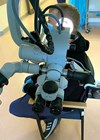
MicroREC Optical System
The MicroREC is a product by Custom Surgical, a German medtech company, and works as an attachment for an operating microscope to enable procedures to be viewed and recorded on a smartphone. It’s advertised as a device used in ENT,...A comparison of two different audiology roles in Denmark and the United Kingdom
The World Health Organisation (WHO) estimates that there are over 360 million people with a disabling hearing loss in the world. Disabling hearing loss is considered to be a loss of greater than 40 decibels (dB) in the better hearing...


