
You searched for "earache"
Lenire tinnitus treatment device now available in Canada
The Lenire® tinnitus treatment device is now available in Canada through 21 clinics across Alberta, British Colombia, Manitoba, Ontarioand Québec. Forty-three percent of Canadians (11.2 million) report experiencing tinnitus in their lifetime, with 37% (9.2 million) experiencing tinnitus in the...
Key topics in Otolaryngology – Third Edition
Eighteen years after the second edition of Key Topics in Otolaryngology, Nick Roland and his co-editors have published the long-awaited third edition. This concise book has been the friend of the examinee for the last two decades within UK and...From the editor / ENT in this issue... CEORL-HNS Brussels 2019 (JanFeb19)
Declan Costello, MA, MBBS, FRCS(ORL-HNS),Editor, ENT & Audiology News; Consultant Ear, Nose and Throat Surgeon, Wexham Park Hospital, Slough, Berkshire, UK Email: d.costello@nhs.net Welcome As we turn the corner from 2018 into 2019, it is interesting to reflect that we...European Audiologist of the Year Winner
Caring UK audiologist who went the extra mile wins major European award. A British Audiologist has been rewarded for her outstanding dedication to patient care with a prestigious European hearing industry award. Paula Cook of Aston Hearing in Amersham has...When dinosaurs ruled the earth
Optimism is abundant in medical research, but frequently ends up being tempered with reality. In his inimitable style, Chris Potter looks back over his career – starting with his medical school memories of Bentley-driving ENT consultants, and moving forward through...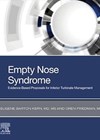
Empty Nose Syndrome: Evidence Based Proposals for Inferior Turbinate Management
To cut or not to cut, that is the question… The authors of Empty Nose Syndrome emphatically implore the reader to spare the inferior turbinate, lest they cause patients this undue misery! This book is a thought-provoking journey through the...
Approach to the orbital floor: which is better?
During skeletal surgery sufficient exposure is key – often a direct approach through the overlying tissues is the easiest route. In the face, however, as the scar would be readily visible, approaches are designed to hide this. Surgical access to...
What we need to know about the new frontier of inner ear therapies
This is an interesting and topical review of the emerging biotechnology and pharmaceutical solutions for hearing loss and related conditions such as tinnitus. This paper suggests we are on the cusp of a very large step-change in the way we...
Spread the therapy thick and quick to make sure it works
Speech sound disorders, such as apraxia, can negatively impact a child’s wellbeing - both their social wellbeing and their academic achievement. Traditionally speech and language therapy has attempted to remediate these difficulties using auditory feedback. More recently, advances in technology...
Global incidence of sporadic vestibular schwannoma
The incidence rate of sporadic vestibular schwannoma (VS) has commonly been quoted as one in 100,000. However, since the advent of screening for asymmetrical hearing loss and increased availability of modern MRI scanning, more recent studies have shown the incidence...
Are you still talking about Covid?
Bell’s palsy (idiopathic facial nerve palsy) has an annual incidence of 15 to 30 cases per 100,000 people. This study aims to assess the effect of Covid and Covid vaccination on this incidence using a large database. Authors used TriNetX,...


