You searched for "Usher"
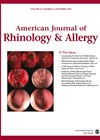
Smell training is also effective in older patients
Olfactory loss is a common problem with a significant impact on quality of life. It has been demonstrated that olfactory training (OT) improves olfactory function in younger patients, but this study focuses in on patients aged 45 years and older....
Small but significant
These authors try to circumnavigate the conundrum of what is influenced by what. For something so small, the impact of the Stria Vascularis cannot be understated. The difficulty in reviewing the influence of loop diuretics or aminoglycosides on the Stria...
What is in the Fountain of Youth?
Does the auditory system have to age? Can we become more like turtles or jellyfish and keep our internals running without degradation? This essay considers the theoretical underpinnings of biological processes in the cochlear, in particular the role of the...
Emergent surgical airway in head and neck conditions
This systematic review and meta-analysis looked at 1011 surgical airways in 14 studies. Of these airways, 50 were cricothyroidotomies. The mean complication rate was 16.8% with an airway-related mortality rate of 0.2%. They noted that the odds of complication significantly...In conversation with Shusheng Gong and Shahed Quraishi on ENT Masterclass<sup>®</sup> China
ENT Masterclass® China was a landmark event that brought an international training resource to Beijing. Profs Shusheng Gong and Shahed Quraishi discuss the organisation of this event, the training pathway in China, and the setup of a typical ENT academic...Prof Quraishi OBE awarded Fellowship ad hominem FRCSEd
At a presentation ceremony on Friday 3 September, President of the Royal College of Surgeons of Edinburgh (FRCSEd), Prof Michael Griffin OBE, welcomed the members of the Council, fresh diplomates, their families and other guests. This was the first conferring...New trustees for Tinnitus UK
The Tinnitus UK team at a recent roadshow event. Tinnitus UK has appointed a new Chair of the Board of Trustees, Pierre Espinasse, as well as a number of new board members. Pierre is a former chief executive of a...Partnership between fashion and hearing care
Fashion brand HAN Kjøbenhavn and GN, a global leader in hearing technology, have joined forces to challenge stigma and misperceptions around hearing aids. HAN Kjøbenhavn marks the launch of their new collection with this partnership, which aims to elevate hearing aids from being a medical necessity to a form of self-expression that should be celebrated.
Tinnitus: Clinical and Research Perspectives
This book encapsulates the many facets of tinnitus from its enigmatic neurophysiological underpinnings to its cognitive effects and treatment approaches. The editors’ multidisciplinary approach in recruiting field experts from a variety of clinical and research backgrounds provides the reader with...
Medical-Legal Evaluation of Hearing Loss
Robert Dobie is a highly experienced and respected international authority in the field of medical-legal assessment in the context of noise induced hearing loss. This book has been written for a broad audience, including otolaryngologists, audiologists and members of the...
Comprehensive Techniques in CSF leak repair and skull base reconstruction
This book certainly does what it says on the tin, and covers its subject very comprehensively. Normally a topic covered by a single chapter in a rhinology or skull base surgery textbook, this book offers 17 chapters on all aspects...