
You searched for "Stricture"
Stricture after total laryngectomy: what are the risk factors?
Stricture after total laryngectomy is common but not inevitable. New insights into risk factors could help clinicians anticipate problems and improve swallowing outcomes. Why this complication deserves renewed attention Total laryngectomy remains one of the defining operations in head and...
Benign oesophageal strictures: overview and management strategies
Benign oesophageal strictures may have several attributable causes including caustic injuries, long-term acid reflux, eosinophilic oesophagitis, anastomotic strictures and endoscopic therapy. Endoscopic dilation via bougies or balloon dilators may treat most strictures successfully and satisfactorily. However, in some situations treatment...Management of benign oesophageal strictures
Benign strictures of the upper oesophagus and pharynx, while not very common, can be a challenging condition to successfully manage. The authors of this article provide us with a detailed description of their technique for using the CO2 laser, balloon...
Transnasal oesophagoscopy in head and neck cancer: an update
The role of transnasal oesophagoscopy (TNE) in the management of head and neck cancer patients is evolving. Until 1990, oesphagoscopy required specialist endoscopists, general anaesthesia or sedation. This review succinctly summarises updates in the evidence for TNE in: i) Screening...
Anatomy for extended sinus surgery
In the world of image guidance and pushing the boundaries of what can be achieved endoscopically the assessment and understanding of preoperative imaging is critical for success. This paper highlights the anatomical variations in the pterygopalatine and sellar regions. The...Minimally invasive techniques for benign salivary gland obstruction
Salivary gland obstruction is a common condition – it is recognised by a complaint of intermittent meal-time swelling of the affected salivary gland and can be accompanied by recurrent infections. Imaging can identify the nature and location of an obstruction...
Robot controlled mastoid surgery!
This is a fascinating piece of work by a Korean team developing a human-robot collaborative control. Their model uses image guidance surgery to locate the drill tip’s position. Important structures can be highlighted – in this case the facial nerve....Transnasal oesophagoscopy (TNO) and balloon dilatation under a local anaesthesia
Many of us are becoming more and more familiar with the use of transnasal oesophagoscopy. It has a number of well-described uses in the outpatient setting and is well tolerated by our patients. Yakubu Karagama describes taking this technique a...
ENT OSCEs: A guide to your first ENT job and passing the MRCS (ENT) OSCE – Third Edition
ENT OSCEs has, in recent years, become one of the most widely used resources for trainees preparing for the MRCS (ENT) OSCE. Although the examination has now been phased out, the book remains highly relevant for the everyday clinical responsibilities...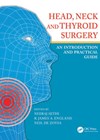
Head, Neck and Thyroid Surgery: An introduction and practical guide
This is an outstanding practical guide to head, neck, thyroid and parathyroid surgery for the trainee starting in the head and neck rotations but also preparing for board college exams such as the MRCS, FRCS or the EBEORL. The authors...
Globus, reflux or perhaps both?
We rarely do an ENT clinic without encountering a patient with persistent or recurring feeling of a lump or foreign body in the throat. We are also familiar with patients dreading to hear the C word after the endoscopic examination...


