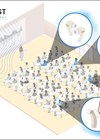
Individuals with hearing loss experience difficulties hearing in public places such as auditoriums, movie theatres, places of worship, transportation hubs, gyms and small and large events, to name a few. The traditional communication methods (speakers and PA system) that are...
Paediatric Audiologist, Natalie Stephenson, shares her experience working with children and young people, the impact of lockdown and the value of patient-centred care, throughout the COVID-19 pandemic. Am I glad that I know The Gruffalo off by heart? Yes, I...
For decades, Professor Tavartkiladze has been the personification of Russian audiology and its best known ambassador on the international stage. Hailing from the republic of Georgia, he has led countless seminal initiatives within Russia to advance the science and practice...
In celebration of Nash Patil’s inauguration as President of the Irish Otolaryngology Society (IOS), we dropped by to ask him a few questions, along with Gerry O’Donoghue, BACO 2020 Master. We’re particularly pleased to hear that Nash is looking forward...
Leading healthcare supplier, DP Medical Systems, has joined forces with Neuranix to bring a brand new, innovative audiology diagnostic device to the UK and Ireland.
Up to 500,000 GP appointments could be saved per annum with patient self-referral to audiology practices - easing pressure on the NHS, according to a new report.
News of the first successful public demonstration of general anaesthesia in Boston, Massachusetts in October 1846 reached Britain in mid-December of that year. James Robinson, a London dentist, gave the first anaesthetic in the United Kingdom when, on 19 December,...
Iain Swan. Iain Swan was a Senior Lecturer in Otorhinolaryngology, University of Glasgow and Consultant Otorhinolaryngologist, Glasgow Royal Infirmary and Scottish Section MRC Institute of Hearing Research 1986-2016. Iain had a happy childhood growing up in Carbeth and attended school...
Bringing light into darkness can also be a task for the physician. With the advent of endoscopy (initially by reflecting light into body cavities), new methods of diagnosis and treatment became available to the otologist. In 1865, the Scotsman John...
Paula Bradley interviews Professor Gerard O’Donoghue, President Elect, Otology Section Council; Royal Society of Medicine on the upcoming ‘Otology Dragons’ Den’ event. Tell me a bit about the proposed event? When is it? Where? This event, the ‘Otology Dragons’ Den’,...
Peter McKelvie, an outstanding head & neck surgeon and oncologist, died on 6 February aged 93. He suffered a spontaneous subdural haemorrhage. British otolaryngology has lost the most remarkable talent of his generation. He combined a prodigious intellect with effortless...
Jonathan Fussey, Consultant ENT Head & Neck Surgeon, University Hospitals BirminghamThis year marked the 11th European Congress on Head and Neck Oncology, held in the impressive Beurs Van Berlage in the centre of Amsterdam. Delegates from around the world convened...