You searched for "rhinology"
The importance of s-ABR in auditory disorders
S-ABR is a method of recording speech-evoked-potentials, but where does it fit in the clinical and research test battery? Here, the authors examine the opportunities for s-ABR. The integrity of the neural transmission of acoustic stimuli is evaluated by auditory...In conversation with Professor David Kemp
Ted Killan, Vice-Chair of the British Society of Audiology (BSA), caught up with Professor Kemp to discuss his scientific journey over the past 40 years, and what we can expect from OAEs in the future. Prof David T Kemp. In...Audiology research: opportunities, career progression and leadership
A career in research can, at first glance, seem far removed from the clinical world of audiology but is that really the case? In this article Melanie Ferguson explains the role of translational research in bridging this gap, as well...In conversation with David Baguley
A reflective discussion with a scientist-practitioner in tinnitus David Baguley has worked in audiology at Addenbrooke’s Hospital since 1985, becoming the Consultant Clinical Scientist in 1989. In 2006, David received an International Award in Hearing from the American Academy of...Cochlear implants: recipient stories
The most powerful evidence for the remarkable achievements made with cochlear implants over 40 years comes from the life-changing, personal stories of those who have benefited from the technology. James Rylance I first noticed a problem with hearing when I...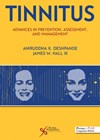
Tinnitus – Advances in Prevention, Assessment, and Management
This is a softcover volume, broken down into six sections over 406 pages printed in greyscale. The book is edited by AK Deshpande and JW Hall III, written by a large number of international experts in the field, and reviewed...
Treating benign positional paroxysmal vertigo
Benign positional paroxysmal vertigo (BPPV) is one of the most common causes of dizziness. Its treatment is the repositioning of displaced otoliths by the canalith repositioning manoeuvre (CRM). Post manoeuvre restrictions are commonly given to the patient. Their benefit has...
Provision of hearing support to people with dementia in care homes
The study suggests care home staff training in hearing care for residents with dementia is often not available or not considered a priority. Resources, facilities, training, staff capacity, capability and support vary widely. Care home provision also varies between social...
Inequitable access to cochlear implantation across the UK
Referral rates and uptake of cochlear implantation in the global adult population are low. Five audiology centres across England and Wales retrospectively explored data over a six-month period in late 2019, post implementation of new National Institute for Health and...