You searched for "service"
Does diet have a role in the prevention of tinnitus?
Tinnitus, diet and healthy ageing Despite the high prevalence of tinnitus, its exact aetiology remains unclear. Research has explored the role of various biological pathways in the development of tinnitus including age-related changes in the auditory system, impaired vascular function,...Unravelling the mystery of hyperacusis with pain
When a person says that sound causes them pain, how can we understand this, and determine what processes are involved? Bryan Pollard navigates us through what is presently known. Pain has long been underrepresented – and often, completely overlooked –...Underdiagnosing eosinophilic oesophagitis in food bolus obstruction: a wake-up call for ENT units
The management of FBO has evolved, with most cases now done by upper GI clinicians. Biopsies should be taken routinely to investigate possible eosinophilic oesophagitis. In acute soft food bolus obstruction (FBO), uncovering the root cause is as crucial as...An update on laryngeal reinnervation
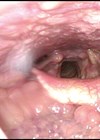
Laryngeal paralysis remains very difficult to treat, but reinnervation offers many attractions. Laryngeal paralysis presents a unique and varied problem that requires a patient centred approach and a range of treatment options depending on laryngeal and patient factors. There is...Superior semicircular canal dehiscence syndrome
In this article, Hannah North and Simon Lloyd give us an overview of the complex condition of superior semicircular canal dehiscence (SSCD) syndrome, including diagnosis, treatment and management. Superior semicircular canal dehiscence (SSCD) is a bony defect of the otic...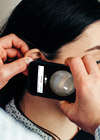
Connecting healthcare
In recent years, there has been a definite shift toward the acceptance and use of smartphone technology in the delivery of healthcare. Within the fields of ENT and audiology, there is considerable appeal in the portability, simplicity, affordability, and connectivity...Addressing the hearing needs of people with dementia
Dr Dawes provides a comprehensive overview of hearing needs of persons with dementia coupled with recommended guidelines for hearing-related considerations when assessing and intervening with persons with dementia. With ageing populations, we face a global dementia challenge. Rates of both...In conversation with Julian Hamann
In recent years, there has been a definite shift toward the acceptance and use of smartphone technology in the delivery of healthcare. Within the fields of ENT and audiology, there is considerable appeal in the portability, simplicity, affordability, and connectivity...Advanced in-office awake rhinology
In-office awake rhinology transforms sinonasal care, offering safe, cost-effective, minimally invasive procedures with rapid recovery and high patient satisfaction. In recent years, the landscape of otolaryngological surgery has undergone a remarkable transformation with the advent of in-office awake surgical procedures....Timing of surgery in chronic rhinosinusitis: does it matter?
While many patients with chronic rhinosinusitis respond to medical treatment, some do not. The next step for these patients is surgery, but how soon should this be offered? Sooner rather than later seems to be the answer, as Claire Hopkins...Continuous intraoperative neural monitoring and thyroid surgery
Continuous intraoperative neural monitoring enhances thyroid surgery safety, helping predict and prevent recurrent laryngeal nerve injury in real time. Recurrent laryngeal nerve (RLN) injury with resultant vocal cord paralysis (VCP) can have a significant impact on patient quality of life...