
You searched for "Implant"
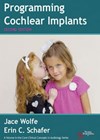
Programming Cochlear Implants - Second Edition
Wolfe and Schafer open their second edition with up-to-date images of brand-specific devices and show various configurations and customisations available to the recipient. For the audiologist, they introduce highly relevant topics such as polar plots for microphones, array types and...MDT assessment of children and adults with implantable acoustic devices (IADs)
Abi Asher, Clinical Lead for the IAD programme in Cambridge describes how hearing care professionals work together to make the best recommendation for the patient, in turn helping navigate through the various devices now on offer. Multidisciplinary teams (MDTs) are...The future of treatments for hearing and balance: a 15 and 50-year perspective
Jameel Muzaffar and Manohar Bance paint a picture of what otology will look like 15 and 50 years’ time. Will we still need doctors? Will there still be an ENT news journal? The last 50 years have seen advances including...
Inter-aural hearing preservation in cochlear implantation
Hearing preservation during cochlear implantation is becoming increasingly important, although results can be unpredictable. NICE are in the process of updating their guidance in the UK and it is possible that those with better hearing than the current candidates will...
Experience of the Sophono transcutaneous bone conduction system
This article is a frank discussion of the authors’ experience implanting these devices. The principle of the device is surgical implantation of a bilobed magnet within a bony well in the cranium (similar position to BAHA). The implant is a...
Auditory deprivation and single-sided deafness
In cases of bilateral auditory deprivation, there is clear evidence of an inverse relationship between performance after cochlear implantation and the length of severe to profound deafness prior to implantation (i.e. the longer the deprivation the poorer the outcome on...
Hidden disabilities and cochlear implantation under 12 months of age
There has been a global shift to providing children with severe-profound deafness cochlear implants (CIs) before they are 12 months old. Early intervention is critical and one of the overriding factors in successful outcomes for children with CIs. Early implantation...
The decision-making process by parents of children with residual hearing who receive cochlear implants
It can be a difficult decision for parents whose children have residual hearing whether or not to undergo cochlear implantation. Their children may seem to be hearing with their hearing aids, and even in some cases can hear without aids....Dr Huw Cooper, Consultant Clinical Scientist: upcoming Chair of British Society of Audiology
Can you start by telling me something about your own background? After my first degree in Psychology at Reading and a year doing other things, I went to Southampton to do the MSc in 1982. My first job after that...New RSCI President-Elect
Professor Laura Viani has been elected President-elect of the RCSI. Prof Viana will take up office 2022-2024. Prof Viana becomes the second female RSCI President in over 200 years and the third of the ENT specialty. Prof Laura Viani is...
Does head trauma as aetiology of deafness affect the outcomes of cochlear implantation?
Head trauma associated with temporal bone fractures is a well known aetiological factor for deafness. The literature assessing the outcomes of cochlear implantation in such cases is rather limited. In this paper, the authors compared the performance of implantees with...


