You searched for "devices"
Transcutaneous vs. percutaneous bone conduction devices
Bone conduction devices (BCD) have proven to be effective options for hearing amplification in patients who are not candidates for conventional hearing aids. This study prospectively surveyed 70 patients with BCD using the COSI (Client Oriented Scale of Improvement) and...Portable otoscopy image capture devices – a comparative review
The use of photo documentation in ENT clinics is becoming more common as technological advances have made the hardware required more accessible. There is significant variation in the price of products. Daniel Moualed, Olivia Whiteside and Chris Aldren review the...Are today’s implantable hearing devices better than conventional devices for patients with conductive and mixed hearing loss?
In March 2014, we published a paper in ENT & Audiology News, with a similar title. Below, an updated overview is presented of available devices (early 2021) for patients with conductive/mixed hearing loss. The focus is on effectiveness. Patients with...
International consensus paper on implantable devices for conductive or mixed loss
This is a weighty but insightful ‘Special Feature’ paper in the June edition of Otology and Neurotology. It has the broad aim to gather current opinion from otologists, audiologists, manufacturers and health-economists from around the world on unilateral hearing implantation...Alternative listening devices: reaching the places hearing aids don’t
The stigma surrounding hearing aids means that many people who would benefit from wearing them are put off from doing so. Alternative listening devices could provide the solution to this. David Maidment discusses these devices, their effectiveness and the impact...Direct-to-consumer hearing devices: a need to combine cosmetic appeal with device capabilities
How safe and desirable are direct-to-consumer amplification devices? A team has put a range of devices through their paces and compared them to a standard NHS hearing device. Why do most individuals who would benefit from hearing aids not try...MDT assessment of children and adults with implantable acoustic devices (IADs)
Abi Asher, Clinical Lead for the IAD programme in Cambridge describes how hearing care professionals work together to make the best recommendation for the patient, in turn helping navigate through the various devices now on offer. Multidisciplinary teams (MDTs) are...
The continued evolution of surgical techniques for bone anchored hearing devices
This paper is not the first, and is unlikely to be the last, to look at a variation on the current technique for inserting the percutaneous titanium bone-anchored component of a bone conduction hearing device. In less than a decade,...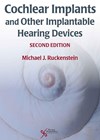
Cochlear Implants and Other Implantable Hearing Devices - Second Edition
This is a detailed resource for hearing-related healthcare professionals. It comprehensively addresses various aspects of cochlear implant care across 22 very readable chapters. Three of these chapters are new in this second edition; including single-sided deafness, auditory neuropathy, and the...What’s new in implantable devices? New indications in cochlear implantation
For over 40 years, cochlear implant procedures have steadily increased. Outcomes for patients are improving as a result of modified surgical techniques, a wider portfolio of electrode arrays, advances in programming strategies, access to improved technology and a better understanding...