
You searched for "trial"
Lies, damned lies and relative risk reduction
Chris Potter has a thing or two to say about the use of statistics and, in doing so, he takes us to a Friday night steak house that is prone to airway disasters and on a short tour of his...
The initial electroneuronography result after temporal bone trauma related facial palsy may be misleading
It is taught that a complete facial nerve (FN) palsy after temporal bone (TB) trauma should be conservatively managed if electroneuronography (ENoG) shows a less than 90% degeneration of response compared to the contralateral side. This small study from the...
Loudness tolerance levels and misophonia
Misophonia is a prevalent condition, yet its assessment and management remain underrecognised by many audiologists. Current literature highlights the frequent co-occurrence of misophonia with tinnitus and hyperacusis. Hence, the link between loudness intolerance problems and misophonia has been hypothesised by...Advances in laryngeal surgery
We are seeing many advances in laryngology: from the lab, from equipment manufacturers and from developments in surgical techniques. The field of laryngology has been under constant change in recent years, with the introduction of new technologies and research. The...Coblation tongue channelling
After uvulopalatoplasty, the tendency is to focus on the tongue base as the next anatomical area to address in the management of snoring and sleep-disordered breathing. In this article, Glen Burgess describes the technique of tongue channelling, to reduce the...
Significance of abnormal retropharyngeal nodes in head and neck cancer
Abnormal retropharyngeal lymph nodes (RLN) have prognostic relevance for patients with oral, oropharyngeal or nasopharyngeal squamous cell carcinoma (SCC). However, consensus on the evaluation and management of abnormal RLN in these patients is lacking. The authors of this paper provided...
Painful temporomandibular joints
This paper is a meta-analysis of randomised controlled trials comparing arthrocentesis with conservative management in painful and restricted mouth opening temporomandibular joint symptoms. Temporomandibular joint dysfunction comprises a spectrum of disorders commonly involving facial pain and loss of oral function...
Pre-habilitation in head and neck cancer – a literature review to guide best practice
Curative treatment of head and neck cancer (HNC) often requires surgery; however, outcomes are impacted by the complexity of the surgery and the patient population. Increasingly ‘Enhanced Recovery After Surgery’ (ERAS) protocols are being used to maximise patient outcomes and...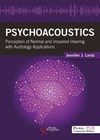
Psychoacoustics: Perception of Normal and Impaired Hearing with Audiology Applications
The field of psychoacoustics and the practice of audiology have always been curious bedfellows. In the clinic, we commonly assess patients’ hearing ability through pure-tone detection, a classic psychoacoustical phenomenon, but just one of the many, many ways in which...The cochlear implant clinic multidisciplinary team meeting
The world’s first cochlear implant clinic was in Melbourne, where multichannel devices were designed by Graeme Clark at the beginning of the cochlear implant era. We are fortunate to hear from Claire Iseli and Rob Briggs, surgeon members of this...


