
You searched for "Endoscopic"
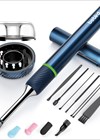
Patient-led wax and aural foreign body removal technology – is it safe?
As ENT and audiology professionals, wax impaction and aural foreign bodies are common presentations to our clinic that can cause significant distress to patients and can preclude diagnostic testing such as pure tone audiograms and tympanometry. We often advise patients...ENT across borders – revisited
The exceptional Professor Muaaz Tarabichi is known to many as a pioneer of endoscopic ear surgery, and a founder of generous scholarships to trainees from developing countries. He also has an inspiring story of how he came to his current...
A review of DISE classification systems
This article looks at the wide variety of classification systems currently available for interpreting drug induced sleep endoscopy (DISE).The fact that there are so many classification systems, suggests that there is: A) a lot of disagreement about how DISE should...
Is pan-endoscopy necessary to detect synchronous primary in upper aerodigestive tract cancer?
Diagnosis of head and neck cancer requires speed. It has also to be comprehensive in view of the possibility of synchronous primary cancer (SPC) associated with upper aerodigestive tract cancer (UADTC). Some centres still consider pan-endoscopy essential in the diagnostic...Navigation in skull base surgery
Advances in navigation and augmented reality are transforming skull base surgery, offering greater precision and safety alongside emerging robotic tools. Surgical robots have been used in various forms across several surgical specialties for over 20 years [1,2]. However, it is...
Platelet-rich plasma-cartilage tympanoplasty
This systematic review and meta-analysis of five studies (n=234 patients) reports the effectiveness of type I tympanoplasty with cartilage and platelet-rich plasma (PRP) compared with type I cartilage tympanoplasty alone for closure of dry tympanic membrane perforations. This is an...
Outcomes of office-based biopsies for laryngopharyngeal carcinoma – faster diagnoses and equivalent oncological outcomes as compared to biopsies under general anaesthesia
Patients in the UK with head and neck cancers are the most likely to face long waits to treatment in comparison to other cancer sites, with only just over half commencing treatment within 62 days of being referred on a...
Does Eustachian tube dysfunction improve with FESS?
This multinational study prospectively collected SNOT-22 data to determine the prevalence and severity of, and whether endoscopic sinus surgery (ESS) had improved, symptoms of Eustachian tube dysfunction in patient with chronic rhinosinusitis (CRS). The SNOT-22 includes two questions which are...
Cocaine detection hours after FESS
This is a very interesting article from Australia regarding the bioavailability of cocaine following atomised application prior to endoscopic sinus surgery. The well-established practice of preparing the nasal mucosa for sinus surgery involves the placement of a usually modified Moffett’s...RhinoEgypt 2026
32nd Rhino Egypt & 17th Pan-Arab Rhinology Society MeetingKTP laser in the office
KTP laser surgery offers a new way of selectively targeting microvasculature within laryngeal lesions and leaving normal surrounding tissues like epithelium and lamina propria intact – and thus preserving physiological phonation. This kind of selective photoangiolysis can be performed in...


