You searched for "psychology"
Awake transnasal laryngeal and pharyngeal biopsy in the unsedated patient
In an attempt to improve the efficiency and flow of patients through a busy ENT clinic, technology now allows the ENT surgeon to consider biopsies in the outpatient setting on a more regular and controlled basis. This can avoid the...Freud’s Friend, Fliess
Wilhelm Fliess, a Berlin rhinologist, was for many years Sigmund Freud’s closest friend and confidant. He was born in Poland in 1858. In 1887, he visited Vienna for postgraduate studies, and met the famous psychoanalyst, Freud [1]. They were immediate...History of ENT - Freud's Friend, Fliess
Wilhelm Fliess, a Berlin rhinologist, was for many years Sigmund Freud’s closest friend and confidant. He was born in Poland in 1858. In 1887, he visited Vienna for postgraduate studies, and met the famous psychoanalyst, Freud [1]. They were immediate...
Atlas of Head and Neck Ultrasound
The aim of the authors in producing this atlas is not only to give beginners a systematic introduction to the basics of head and neck ultrasonography, but also to provide more experienced users with the opportunity of gaining further in-depth...
Mindfulness meditation versus relaxation therapy for tinnitus
Tinnitus, defined by McFadden as “a conscious experience of sound that originates in the head of its owner, without an external acoustic source”, has a high prevalence and variable psychological impact. It results from maladaptation of the brain to a...
Otoplasty equals happiness
There are frequent criticisms of procedures that are viewed as cosmetic therefore of no benefit to health. Here a German group have looked at the benefit of otoplasty on quality of life. They point out that ‘beautiful people have an...
Three years later: report on the state of well-being of patients with chronic tinnitus who underwent modified tinnitus retraining therapy
This paper reports on 130 patients with tinnitus of at least three months duration who underwent ‘Modified Tinnitus Retraining Therapy’ (MTRT). MTRT combines psychological and physical therapies with standard tinnitus retraining therapy provided as a course of multi-disciplinary treatment, as...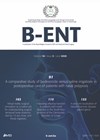
Factors associated with laryngopharyngeal reflux
This Chinese cross-sectional survey across three hospitals and 320 patients looked at the effect of unhealthy lifestyles and eating habits, as well as psychological difficulties, on the development of laryngopharyngeal reflux (LPR). All the participants underwent gastroscopy, laryngoscopy and various...Treatment regret in head and neck cancer – trading function for survival
Treatment for H&N cancer can be extremely tough for patients. How do we explain the likely impact as they try to make decisions? And what happens when they regret their choice? Treatment regret is a form of decision regret, involving...
Factors affecting hearing aid recommendations
There is a wide variety of hearing instruments available to the hearing impaired. Hearing care professionals are often confronted with making decisions on which to recommend based on audiometric and non-audiometric parameters (e.g. vision, manual dexterity and vanity). The factors...
Talking through technology – keeping up with the mainstream
Augmentative and alternative communication (AAC) system development has often made early use of innovative technology. Touch screens have been a part of this technology for some time. In fact, touch screens were invented in 1965 but it wasn’t until the...