
You searched for "laryngology"

JLO surgical video: right selective neck dissection levels 2-5
Surgical training has become more challenging following the introduction of the European Working Time Directive. The consequences of reducing the amount of time we operate has driven us to look for other resources to fill this gap. These initially began...Soluvos Medical wishes readers a lovely summer season
Soluvos Medical had a busy conference schedule leading up to the summer break, and the team is now recharging and looking forward to meeting readers again at the next symposia and hands-on courses after the summer break. Find the Soluvos...National SIOP Congress 2026
National Congress of the Italian Society of Paediatric OtorhinolaryngologyFrom surgeon to scholar: the remarkable life of Philip Stell
Professor Philip Stell was an extraordinary man: following an astonishingly illustrious career in ENT, he excelled as a medieval historian. With the Philip Stell Prize due to be awarded in May, his friend Pat Bradley looks back at his remarkable...From the editor Nov/Dec 2024
Declan Costello, MA, MBBS, FRCS(ORL-HNS),Consultant Ear, Nose and Throat Surgeon, Wexham Park Hospital, Slough, Berkshire, UK. E: d.costello@nhs.netTW / X: @Voicedoctor_uk Never let it be said that we don’t provide a broad range of topics for you to digest. For...
Voice outcomes following extended laser resections for laryngeal cancer
It is now widely accepted that the oncological and voice outcomes following transoral laser microsurgery for early T1a glottic cancers are equivalent to, if not superior to, traditional radiotherapy. Voice outcomes following more extensive resections have not been as frequently...
Hypopharyngeal Cancer
The 83rd book from the series by Advances in Oto-Rhino-Laryngology is another addition for the surgeon looking for an update in the management of hypopharyngeal carcinoma. The 180-page publication, divided into 16 chapters with 23 figures and 19 tables, has...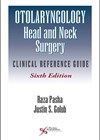
Otolaryngology Head and Neck Surgery: Clinical Reference Guide – Sixth Edition
When I began my ENT training, the revered ‘Pasha’ textbook was one of the first recommendations given to me by senior colleagues who were in the throes of FRCS revision. This revamped edition serves to improve a book which was...
Rationales to explore the neck in penetrating injuries
Penetrating neck injuries in the UK are more commonly associated with low velocity objects such as knives and blades as opposed to gunshots. To explore the neck requires careful consideration of the need to do so in line with Burgess...
Associated findings in MRI used for detecting acoustic neuroma
Presently, gadolinium enhanced magnetic resonance imaging is the ‘gold standard’ for investigating acoustic neuroma. There are often ‘incidental’ findings that may or may not be significant. In this study of 109 scans, the authors noted an uptake of 0.9% for...
Use of topical steroids and antibiotics, compared to systemic antibiotics in the treatment of acute rhinusinusitis
Acute rhinusinusitis is mainly initiated by viral infections. Bacterial infection is usually superadded. The inflammatory cascade upregulates the pro-inflammatory mediators resulting in pain, nasal obstruction and nasal discharge. Local application of steroids and antibiotics could provide a higher concentration of...


