You searched for "diagnosis"

Measurement of HINTS in peripheral vestibulopathy
Dizziness; Head impulse test; Nystagmus; Skew deviation; Vertigo.
Effect of peripheral and central vestibular dysfunction on sense of direction
Sense of direction (SOD) is the ability to orientate ourselves and to determine the locus of objects in our environment. The vestibular system plays a key role in spatial orientation by encoding angular acceleration in the absence of visual cues...Nuclear heads – and necks
Imaging of the extra-cranial head and neck is challenging due to the anatomic complexity of the region. CT, MRI and ultrasonography (US) are amongst the most frequently utilised radiological modalities in head and neck imaging but do not always provide...Mentally and physically safe workplaces: the challenge of doctors’ well-being
Our ENT consultant colleague Eric Levi bravely tackles the very real elephant in the room of that stigma which is not really discussed until it is often too late. It takes courage to tackle a difficult topic like doctors’ mental...Intratympanic steroids in Ménière's disease: what’s the evidence?
The days of drastic surgery for Ménière's disease are long gone. We know that intratympanic injections can deliver high doses of medication to the inner ear with minimal discomfort and minimal risk. But how do we choose from the myriad...
Aboriginal, Torres Strait Islanders and Pacific Islander Ear Care Manual
I was delighted to review this manual, having had the previous privilege of joining its lead author, Professor Harvey Coates, in one of his indigenous ear health clinics just outside Perth, Western Australia. Prof Coates has worked with a broad...Smart cochlear device: how biosensors could revolutionise hearing care
Smart cochlear implants could monitor inner ear health, deliver drugs and adapt in real time, merging biosensing, microfluidics and personalised hearing care. From passive hearing aids to smart implants Hearing technology has advanced dramatically over the last few decades, yet...Gastric inlet patch – an under-diagnosed cause of globus
A gastric inlet patch (GIP) is an island of heterotopic gastric mucosa found commonly in the proximal oesophagus just below the upper oesophageal sphincter. It is often underdiagnosed due to its location. Its importance and clinical relevance can be underestimated...
Polysolmnography and laryngomalacia severity
Laryngomalacia represents the single most common cause of stridor in infants. Most cases are self-resolving, but a proportion of children will require surgical intervention. This group aimed to analyse the efficacy of polysomnography in determining the severity of laryngomalacia in...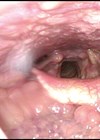
Virtual chromoendoscopy (VCE)
‘That’s a funny looking lesion on the larynx, it’s probably benign, but I should take a biopsy.’ Liz Ross and Ajith George discuss whether virtual chromoendoscopy will change this thought process. What are the origins and ENT applications? Traditional chromoendoscopy...
Medical Speech-Language Pathology: A Practitioner’s Guide
Medical Speech-Language Pathology: A Practitioner’s Guide is an informative and comprehensive guide to differential diagnosis, assessment and management of communication and swallowing disorders in the medical setting, which includes consideration of adult patients from early diagnosis to end of life....