You searched for "creative"
Hearing loss and Alport syndrome
Alport syndrome (AS) includes a group of hereditary diseases caused by mutations in the COL4A3, COL4A4 or COL4A5 genes. These genes are responsible for the biosynthesis of α3, α4 and α5 collagen IV chains, which are located in the glomerular...
Rapid Interpretation of Balance Function Tests
I read the title with some concern as I would prefer my test interpretation to be ‘accurate’ rather than ‘rapid’, nevertheless the content of the book delivers what one would anticipate is intended, which is an easy to read outline...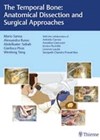
The Temporal Bone: Anatomical Dissection and Surgical Approaches
The Temporal Bone: Anatomical Dissection and Surgical Approaches does exactly what it says on the tin. It is an excellent combination of anatomical atlas and dissection manual for temporal bone surgical procedures, designed to be kept open at the benchside...
Less pain more gain: impact of prophylactic gabapentin on swallowing outcomes in head and neck cancer patients undergoing radiation treatment
Patients planned for chemoradiation to the head and neck are usually advised to expect some pain and soreness during their treatment and that pain relief will be offered as and when it is required. Uncontrolled pain and mucositis affect oral...
What is the optimum duration of voice rest after microlaryngoscopy procedures?
Recent survey data looking at the opinions and practices of otolaryngologists in the US and the UK demonstrate that there is a wide variation in recommendations made for voice rest after vocal fold surgery. In the US, the most common...
The laryngeal microdebrider – a useful adjunct in the surgical treatment of Reinke’s oedema?
The surgical treatment of Reinke’s oedema traditionally involves a cold steel incision placed in the lateral aspect of the vocal fold with aspiration of the characteristic gelatinous contents. In this paper, the authors compare voice outcomes in patients treated with...
Seeking medical attention with tonsillectomy complications depends on who you are. Lessons from the USA
In the current UK model, NHS care is free at point of access so there are no perceived economic barriers to seeking attention with postoperative complications. This study from the US examines surgical and emergency room databases from across California,...
Gardasil vaccination – an effective adjuvant therapy for RRP?
The clinical manifestations of recurrent respiratory papillomatosis (RRP) can vary hugely from individual to individual. Whilst some affected children will outgrow the disease, a subset of patients will experience frequent recurrences and require multiple surgical procedures over the course of...
DVT prophylaxis in cranial procedures
Deep vein thrombosis (DVT) is a result of disturbed balances in blood flow patterns, blood clotting factors promoting coagulation and vessel wall endothelial injury. The subsequent disruption of coagulation and fibrinolysis mechanisms lead to venous clot formation and propagation. The...
A voice as smooth as silk?
A number of materials currently exist for vocal fold injection medialisation. Popular options include calcium hydroxylapatite (CaHA), hyaluronic acid (HA) and polydimethylsiloxane (PDMS). The authors of this paper state that there is an unmet need for an injectable material that...
Updates on current evidence for biologics in chronic rhinosinusitis
For a comparatively short piece, this article manages to pack in a lot of important information about a complex emerging area of rhinology – immunologically targeted therapy (biologics). Immunologically targeted therapy is a rapidly progressing and expanding domain which is...