You searched for "Audiometry"

Tablet-audiometer school hearing screening in the context of a developing country
This paper presents a novel use of innovation to tackle the challenges of providing school-age hearing screening in low and middle income countries (in this case Nicaragua, second poorest in the western hemisphere), from the creators of a tablet-based audiometer...Assessing extended high-frequency hearing
The frequency range of human hearing spans 20 Hz to 20 kHz. In the UK, standard audiometry usually assesses 0.25–8 kHz; the extended high frequencies (EHFs) are those above 8 kHz. The importance of assessing EHF hearing has been increasingly...
Smartphone hearing test
Our Editors’ Choice for this edition reviews an article looking at the use of a smartphone app for hearing screening. We have all had to integrate telehealth into our practice to some extent recently and this paper examines a teleaudiology...GSI releases video series: Closing the Audiology Gap with Automation
Grason-Stadler, a worldwide leader of clinical audiometric systems, hosted a conversation with Dr James W Hall III and Dr Robert Margolis to discuss the current landscape around the patient-provider gap and the essential need for an automated tool.Looking at musculoskeletal disorders in audiology
Musculoskeletal disorders are one of the leading cause of sickness absence from work, work disability and loss of productivity across all European Union member states. Isla Beausire is a working audiologist with a personal and professional interest in this subject...Grason-Stadler updates Pello Audiometer
Grason Stadler (GSI), a leader of clinical instrumentation, is proud to announce updates to the GSI Pello™. These updates are released to align with recent updates that were also implemented on the GSI AudioStar Pro™, the most significant being the...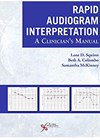
Rapid Audiogram Interpretation: A Clinician’s Manual
This book is a manual and a workbook to systematically understand and interpret an audiogram for those who are new to audiometry such as residents, trainees and students. It is a worthy reference guide even to well-established practising clinicians. The...
Audiology Answers for Otolaryngologists
Audiology Answers for Otolaryngologists aims to provide a grounding in audiology for otolaryngology residents and other professionals allied to audiology, who would otherwise have limited exposure to clinical audiology. It is written by senior audiologists at Washington University School of...
Electrocochleography and cochlear implants programming
Cochlear implants (CIs) often are the only option for people with severe to profound sensorineural hearing loss to be able to hear. Therefore, effective CI programming seems very important, especially in children who are still developing their speech. Using acoustic...Will it ever happen?
Audiology is a rapidly evolving field, with many exciting developments on the horizon. David Baguley identified some topics of interest, and asked some international experts ‘will it ever happen?’ Gene therapy for deafness After years of development, gene therapy for...
Aided speech auditory brainstem response
Auditory brainstem response (ABR) is commonly used for hearing screening and is considered as one of the important means of objective audiometry. Speech ABR is a relatively new concept and is regarded as a marker of speech encoding at the...