
You searched for "Infants"
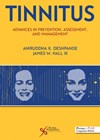
Tinnitus – Advances in Prevention, Assessment, and Management
This is a softcover volume, broken down into six sections over 406 pages printed in greyscale. The book is edited by AK Deshpande and JW Hall III, written by a large number of international experts in the field, and reviewed...
Simulation and otologic surgery
Ensuring adequate exposure and developing surgical skills for trainees has been an ongoing challenge. In this article, the authors reviewed the role of simulation and its role in developing skills in otologic surgery for trainees. Virtual-reality (VR) simulation models have...
Long-term results of incus vibroplasty in patients with moderate-to-severe sensorineural hearing loss
The Vibrant Soundbridge (VSB) middle ear implant is now a well-accepted and widely utilised treatment option for patients with sensorineural hearing loss unable to use standard hearing aids. However, as a relatively recent addition to the portfolio of implants available...
Bone anchored hearing devices in very young children
This paper presents results of BC devices in very young children and helps inform an honest discussion of risks / benefit with prospective parents. The authors of this article from Starship Children’s Hospital, Auckland, New Zealand have a series of...
Experience of the Sophono transcutaneous bone conduction system
This article is a frank discussion of the authors’ experience implanting these devices. The principle of the device is surgical implantation of a bilobed magnet within a bony well in the cranium (similar position to BAHA). The implant is a...
Cochlear implantation in children with congenital long QT syndrome
Jervell and Lange-Neilsen syndrome is a condition where sensorineural deafness coincides with inherited abnormalities of the heart, resulting in prolonged ventricular repolarisation, frequently shown on an ECG with a prolonged QT interval. These children can present at implant centres for...
Inter-aural hearing preservation in cochlear implantation
Hearing preservation during cochlear implantation is becoming increasingly important, although results can be unpredictable. NICE are in the process of updating their guidance in the UK and it is possible that those with better hearing than the current candidates will...
The paediatric dilemma of one ear in and one ear out of NICE criteria
The auditory implant team in Manchester have implanted a cohort of children where audiological thresholds meet the NICE guidance for cochlear implantation (CI) in one ear only, and the other falls into moderate, severe or sloping loss. These children are...
Recurrent seroma in cochlear implanted patients
Little is known about why some patients experience recurrent seromas over the implant package and in the absence of any cause, antibiotics are frequently prescribed as a precaution to protect the implant from infection. A tertiary referral centre selected five...
Peripheral nerve stimulation for chronic refractory pain
Peripheral nerve stimulation (PNS) plays an important role in treating chronic refractory pain syndromes that manifest in limited distributions and overlap with areas of neurologic innervation. The process is generally thought to capitalise on the inhibition and activation of pain-related...
Auditory deprivation and single-sided deafness
In cases of bilateral auditory deprivation, there is clear evidence of an inverse relationship between performance after cochlear implantation and the length of severe to profound deafness prior to implantation (i.e. the longer the deprivation the poorer the outcome on...


