You searched for "nursing"
Getting to grips with acoustic trauma
Our understanding of hearing loss caused by noise exposure to those in the armed forces is growing in interest and understanding. Research at a cellular level is essential to increase our understanding so that we can better diagnose, manage and...
Put the maxilla in the right place
This is a paper from Singapore where they attempted to validate the position of the maxilla in the sagittal plane against several reference lines arising from the position of the forehead in orthognathic surgery. The position of the maxilla was...Educational audiologists: adding value, bridging gaps
Educational audiology provides a vital link between health and education by supporting children with hearing loss in educational settings. Joy Rosenberg presents an overview of the training route available in the United Kingdom. Students in lecture. Educational audiologists greatly enhance...
The Oxford Textbook of Otolaryngology
JGG Ledingham was a famously affable man, the very epitome of the Oxford academic clinician with a legendarily unruffled bedside manner and razor-sharp intellect. He was awarded a personal Chair in Medicine in 1989 and such was his sangfroid, I...In Memoriam: Charles I. Berlin, PhD
Dr Charles “Chuck” Berlin was an international guiding star in hearing research and clinical audiology for over 50 years. He was a renowned scientist, mentor, teacher, clinician, colleague, accomplished musician, and friend to hundreds of colleagues from around the world....A snapshot of UK newborn hearing screening services during the COVID-19 pandemic
During the COVID-19 pandemic, new guidance for newborn hearing screening programmes and management of audiology referrals was released by Public Health England [1,2]. There was also joint guidance from the UK professional bodies [3] and guidance from NHS England regarding...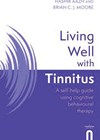
Living Well with Tinnitus: A self-help guide using cognitive behavioural therapy
Living Well With Tinnitus is part of the Overcoming / Living Well series of self-help books, aimed at directly addressing the population afflicted with the titular condition. It runs at 335 pages in paperback format and, at its core, guides...