
You searched for "INTEGRATE"
RSM ‘Otology Dragon’s Den’ - Interview with Professor Gerard O’Donoghue
Paula Bradley interviews Professor Gerard O’Donoghue, President Elect, Otology Section Council; Royal Society of Medicine on the upcoming ‘Otology Dragons’ Den’ event. Tell me a bit about the proposed event? When is it? Where? This event, the ‘Otology Dragons’ Den’,...Current perspectives of tinnitus and its management
Whilst there are various therapeutic options for ameliorating the impact of tinnitus, there is no current approved treatment for attempting to eradicate, or even for reducing, the loudness of tinnitus.ENT UK Head & Neck Meeting
The ENT UK Head and Neck Evidence-Based Management Meeting focusing on malignancy of the nose and paranasal sinuses was held in the historic market town of York. The multidisciplinary approach required to manage this complex disease was reflected in the speaker lineup, with national representation from ENT, maxillofacial and plastic surgery, oncology, palliative medicine, histopathology and radiology.Sit back, relax and enjoy the flight! & Arrivals
This series of stories is dedicated to those of you with whom some of these moments were shared (or endured) and, above all, to my amazing and long-suffering husband, David Howard. Most of you know him as an exceptional head...
Does pre-op intratympanic gentamicin improve balance control after vestibular schwannoma surgery?
This retrospective study was based on data from 44 patients selected from a cohort of 153 who had undergone surgical resection of vestibular schwannoma over a 10-year period. The aim was to evaluate the dynamics of the postural control system...Audiology in this issue... Paediatric Audiology Gamechangers (NovDec18)
Fifty years ago, the National Conference on Education of the Deaf followed up on the Babbidge Report of 1965, recognising the failure of oralism in deaf education. Because young, deaf children at that time did not have access to sound, they could not develop speech and language. Further, because children were identified at two years or later, early intervention was only a dream.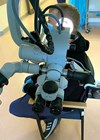
MicroREC Optical System
The MicroREC is a product by Custom Surgical, a German medtech company, and works as an attachment for an operating microscope to enable procedures to be viewed and recorded on a smartphone. It’s advertised as a device used in ENT,...


