
You searched for "Air-conduction"
ENT/AUDIOLOGY in this issue March/April 2020
Emma Stapleton, MBChB, FRCS (ORL-HNS), Consultant Otolaryngologist, Cochlear Implant and Skull Base Surgeon, Manchester Royal Infirmary, UK. E: emmastapleton@doctors.org.uk Twitter: @otolaryngolofox Martin O’ Driscoll, Consultant Clinical Scientist; Head of Audiology and Hearing Implants, Audiology (Hearing and Balance) Centre, Manchester Royal...
Reconstructive Plastic Surgery of the Head and Neck: Current Techniques and Flap Atlas
Head and neck reconstruction continues to provide a challenge to surgeons, driving innovative approaches in free-flap surgery and a need to embrace developing technologies. This excellent text, written primarily by authors from the renowned MD Anderson Cancer Center in Texas,...
Mastoid obliteration for canal wall down surgery
Surgery for acquired cholesteatoma is varied amongst surgeons with some only performing combined approach tympanoplasty. The change in lifestyle for patients with canal wall down surgery is significant and hence this group in Japan looked at 118 adult patients with...
Silent sinus syndrome: which approach offers the best outcome?
Silent sinus syndrome (SSS) is a rare condition with patients presenting as spontaneous, painless enophthalmos, hypoglobus, orbital asymmetry, and maxillary sinus collapse on the ipsilateral side. The orbital resorption occurs secondary to negative pressure created in the maxillary sinus by...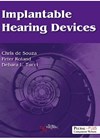
Implantable Hearing Devices
Implantable Hearing Devices is aimed principally at ENT surgeons in training and as a resource for otological surgeons wanting to know more about the devices available. The authors state it is a clear, concise, and comprehensive book offering answers to...
Literature review of experience with the BAHA Attract implant
The authors undertook a literature review for reports on patients who underwent BAHA Attract implantation. Of the 497 PubMed articles, 10 studies met their inclusion criteria. All the studies published were observational studies. There were no randomised control trials. The...
Open hearing-aid fittings or closed
There is always a balance between different types of hearing aids and their advantages and disadvantages that influence choice of device and ultimately user preference. Personal choice also plays a role when deciding on behind the ear or in ear...
Bone anchored implant stability predicted one week after implantation
Bone conduction (BC) devices can now be implanted as a single stage procedure with minimal soft tissue thinning to reduce the complications in the surrounding skin. The question of optimal loading time has to my mind not been answered. Here...
Understanding osseointegration for the otologist
Bone conduction implants are hearing devices that require osseointegration to create a stable and reliable interface between the hearing device and the skull to deliver sound to the cochlea. This article reviews the physiology of osseointegration, factors that may lead...Interacoustics launches IA-AMTAS self-testing option
Interacoustics recently launched the IA-AMTAS automated test feature for patient self-testing in the audiometry module of Affinity Compact.


