
You searched for "INTEGRATE"
Sound Sensation music festival
Alex Griffiths-Brown heads to Austria to hear MED-EL showcasing music by and for hearing implant users.Are ENT patients who research their symptoms online better informed?
All our patients look up their symptoms online before they visit us, don’t they? And patients who do so are better informed than those who don’t, right? Well, that’s not actually the case… The ‘information era’ More information is now...Sentio™ System – an active transcutaneous bone conduction hearing system from Oticon Medical
As bone conduction technology advances, implant options continue to improve; here, the Sentio™ System is outlined, including indications, surgical technique and aftercare. Bone conduction hearing aids (BCHA) are an established management option for adults with conductive (CHL) or mixed hearing...Royal Society of Medicine – new presidents, new programme
Exciting changes are occurring at the ENT section of the Royal Society of Medicine over the next academic year. Professor Peter Rea and Professor Claire Hopkins, the incoming presidents of the Otology and the Laryngology & Rhinology Sections, have come together to create a combined programme.
Adjuvant intratympanic steroid therapy in sudden sensorineural hearing loss
Sudden sensorineural hearing loss (SNHL) means abrupt hearing loss by 30dB affecting three consecutive frequencies within 72 hours. This is treated by high tapering doses of systemic steroids, the role of which is controversial and fraught with possible complications in...
Cochlear implantation and inner ear malformations
In this study the authors attempted to compare the outcomes in children who underwent cochlear implantation (CI) with inner ear malformations to those that had normal inner ear anatomy. Sixty three children with prelingual deafness who underwent CI were included....
SNOT-25 to assess CRS - a new tool
The SNOT-22 is a well-established validated instrument, designed to evaluate the rhinosinusitis-specific health status and health-related QOL, however makes only one broad reference to productivity. The objective of this paper is to evaluate a modified SNOT-25 created to better assess...
Evaluating the nose
Objective evaluation of the nose before and after rhinoplasty is not standard. The authors adapted the MiRa scale after translation to French to be validated. For a better practical approach, the translation was conceptual rather than literal and followed five...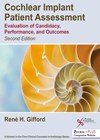
Cochlear Implant Patient Assessment: Evaluation of Candidacy, Performance, and Outcomes – Second Edition
The second edition of Cochlear Implant Patient Assessment aims to become a point of reference for all professionals involved in assessing cochlear implant candidacy and interested in broadening their knowledge to maximise the hearing capabilities of their patients. This book...


