
You searched for "nursing"
Wireless accessories for hearing aid users: putting the ‘soul’ back into hearing – a case study
The following case study reports on the experiences of a hearing impaired National Health Service (NHS) patient who was given Bluetooth accessories as part of a study into their benefits when used with hearing aids [1]. The name of the...Enhancing the pure-tone average calculation method for reporting hearing outcomes: the need for a transition to the logarithmic mean
Comparing studies requires common approaches. Ali Faramarzi takes a moment to consider how to tackle the presentation of audiometric data in publications. Uniformity in reporting hearing outcomes is paramount for accurate evaluation and comparison of hearing-related research. Standardised guidelines are...
Objective Measures in Cochlear Implants
‘Objective Measures in Cochlear Implants’ is likely to appeal to audiologists working with cochlear implant recipients. However, the author has also included two introductory chapters covering the basics of a cochlear implant and signal delivery for those with less experience....Multi-channel cochlear implants: past, present and future
Forty years since the first multi-channel devices were implanted, who better than Ingeborg Hochmair, who has been a key figure throughout their evolution, to offer her thoughts on the past, present and future of multi-channel cochlear implants? Read on for...Collaborating with patients on research priorities in hyperacusis: the James Lind Alliance project
An innovative and inclusive approach to the identification and prioritisation of research questions is to place the views of patients at the heart of the process, and in partnership with clinicians. The application of this to hyperacusis is described by...In conversation with Dr Helen Bevan: Approaching change in the NHS with a new mindset
Dr Helen Bevan has been a leader of large scale change in the English National Health Service (NHS) for more than 20 years and was recently recognised as one of the 60 most influential people in the history of the...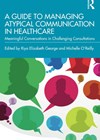
A guide to managing atypical communication in healthcare
This book provides the background theory as well as practical tips for communicating with different patient populations and varying conditions. Published in 2023, it is a recent book with a great deal of research and practice guidance embedded from various...Music and hearing aids - the current state of affairs
‘Speech sounds great, but music isn’t right’ is a common complaint from hearing aid users across the globe. In this article, Marshall Chasin, one of the most published audiologists on the subject of music and hearing, outlines why patients with...BAPO Annual Meeting 2025
Reem AlAbdulwahed, ST6 Otolaryngology, Ninewells Hospital, Dundee I recently had the opportunity to attend the British Association of Paediatric Otolaryngology annual conference held over two days. (The BAPO Juniors Revision Course, was held on the Wednesday before the conference and...Armageddon and surgical outcomes
In the excitement of the festive season I am sure many of you will have omitted to commemorate the 60th anniversary of a highly significant world event. According to a small apocalyptic cult led by a Chicago housewife named Dorothy...Green hearing services: sustainable care for people and the planet
Environmental resource depletion is no longer a distant threat; it is a current health emergency. Sustainable hearing services are kind to both people and the planet. In January 2026, the International Society of Audiology hosted a webinar bringing together those...


