
You searched for "medication"
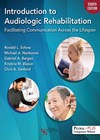
Introduction to Audiologic Rehabilitation: Facilitating Communication Across the Lifespan – Eighth Edition
The eighth edition of Introduction to Audiologic Rehabilitation is an invaluable and highly informative resource for anyone involved in the field of audiology and speech-language pathology. Designed to accommodate undergraduates, graduates and experienced clinicians alike, this textbook skilfully bridges the...
Occupation, role and performance in adults: a comparative study
The authors investigate the occupations of adults with cochlear implants (CI) compared to those with hearing impairment without implants (HI) and individuals with normal hearing (NH). A total of 204 participants were included: 98 CI users, 52 HI individuals and...
Treatment outcomes and dose rate effects following gamma knife stereotactic radiosurgery for vestibular schwannomas
Gamma knife radiosurgery (GKRS) is one of the definitive stereotactic radiotherapy treatment modalities for vestibular schwannoma (VS) management. Its efficacy depends on the cobalt-60 source which has a half-life of 5.26 years. According to the study authors, the actual rate...Why register? The importance of being a registered audiology professional
Navigating UK audiology registration can be complex. This article explains the process, underscoring why proper registration is vital for safe and professional practice. Why register? This question is not unique to the UK. An article published by Goulios and Patuzzi...Hearing conservation in military operations
Navy audiologists protect service members’ hearing, ensuring situational awareness, safety and mission readiness in noisy military operations. Active-duty navy audiologists are naval officers who apply their specialised skill sets and serve as subject matter experts in hearing conservation and communication...How trainees can make major contributions to practice
At a time when many of our trainees feel poorly supported and disheartened, the formation of a National ENT Trainee Research Network (Integrate) has been a major advance, enabling them to develop and execute research projects directly relevant to clinical...The astronomer’s nose: Tycho Brahe’s controversial prosthesis
Tycho Brahe (1546-1601) is a familiar and colourful figure in the history of science. The immense quantity of data he collected during his lifetime would enable the work of Johannes Kepler and has gained him admission to the astronomical pantheon....In conversation with Robin Youngs
Members of ENT UK (The British Association of Otolaryngologists and Head and Neck Surgeons) have a long tradition of humanitarian work in countries in Africa and Asia (see article with Professor Davis Howard in previous issue for example). The ENT...The role of training programmes in protecting patients
ENT trainees are fully registered doctors who have responsibilities to comply with the requirements of Good Medical Practice. This includes ensuring that they put the interests of their patients at the heart of their practice. This duty is complementary to...Navient receives FDA 510(k) clearance for ENT procedures
CKI (ClaroNav Kolahi Inc.) has received FDA 510(k) clearance for Navient in ENT procedures, expanding its previous clearance for cranial applications. Navient is now approved by major global regulatory bodies, including Canada (HC), Europe (EU MDD), China (NMPA), UAE, Saudi...The connection between hearing loss and cognitive decline: current perspectives
Editorial clarification This article reviews research exploring associations between hearing impairment, cognitive decline and dementia. While evidence shows a dose-dependent relationship, it is important to note that association does not prove causation, and current research does not definitively show if...


