You searched for "training"

How quality improvement helped to create local guidelines for good tracheostomy care
Significant morbidity and mortality is associated with tracheostomy insertion. A complex, multistep process exists to help patients towards decannulation. This process is often complicated by patient comorbidities, discontinuity of care and communication as patients move through hospital, and variable experience...Spotlight on Africa: paediatric ENT focus
Sub-Saharan Africa (SSA) carries 24% of the global disease burden but employs only 3% of the world’s health workers [1]. Unique workforce considerations exist in SSA including a paucity of skilled health professionals and fluctuant political climates [1,2]. Shazia Peer...
Novel method for determining BCC margins
This correspondence describes a new technique for determining basal cell carcinoma (BCC) borders, to aid in obtaining clear peripheral resection margins. Whilst this can be straightforward in small well-defined nodular BCCs, some BCC subtypes are ill-defined or morphoeic, and resection...BAAP Annual Conference 2025
Shaista Kerai, ST3 Audiovestibular Medicine, Lancashire Teaching Hospitals NHS Foundation Trust, and Amol Anand, ST4 Audiovestibular Medicine Whittington Hospital NHS TrustThe British Association of Audiovestibular Physicians (BAAP) hosted its 2025 Annual Conference in Birmingham, drawing clinicians, researchers and trainees from...ENTelligence: driving safe and transparent AI innovation in ENT
AI is seemingly going to be ubiquitous. How do we as ENT clinicians help to shape its direction? Artificial Intelligence (AI) is reshaping modern medicine. Algorithmic analysis is now influencing decisions once made solely by clinicians. Yet, in surgical specialties...CEORL-HNS 2024
Held from June 15 to 19 at the Dublin Convention Centre, this was an unmissable event for ENT surgeons and allied health professionals across the world. Hosted by Professor John Russell, the President of the Confederation, the event brought together...
A study defining septal areas and turbinates that are relevant in assessing patients with nasal obstruction
The symptom of nasal obstruction is subjective when patients present in clinics. The decision to intervene surgically is often made on clinical appearance of the nasal septum and turbinates which, unless extreme, cannot always be judged as different from patients...Implicit bias in audiology and wider healthcare
What is implicit bias and how might it affect patient outcomes in hearing healthcare? Yovina Khiroya provides insight into the terminology and the effect on people and service delivery. As much as possible within healthcare, we try to reduce implicit...
Which bit of our brains do we need to recognise fear, disgust and happiness?
Recognising other people’s emotions is a useful life skill for human interaction in both social and vocational situations. Yet there remains significant debate about which areas of the brain are required to enable us to read and understand these facial...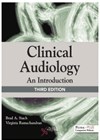
Clinical Audiology: An Introduction - Third Edition
Clinical Audiology: An Introduction - Third Edition is intended as a course book for students in audiology. It is aimed primarily at students in the USA, although it would also be suitable for students in other countries. It is a...