
You searched for "fillers"
Tinnitus without hearing loss – inflammation?
Inflammation can have a profound impact on multiple systems. Certainly in recent years, autoimmune conditions are on the rise and the impact on audiovestibular symptoms have been documented. Given the rates in the population, the impact of inflammation on the...What’s new about the 5th Congress of the CEORL-HNS?
The CEORL-HNS congress will feature novel ideas for sessions, including debates, ‘basic ENT’ and ‘nightmare’ sessions! The two leading figures of the meeting tell us about the evolution of the congress and future directions. There is something new about the...Treating voice disorders in singers
There are few ENT surgeons who have as much insight into singers’ problems as Nick Gibbins. A good knowledge of working patterns, repertoire and the physiology of ‘vocal athletes’ is essential. He shares a few thoughts with us. When deciding...Microneedles enable inner ear precision medicine
Developing safe, reliable and efficient ways to deliver therapeutics into the cochlea is a key challenge. In this article, the authors share their work to develop microneedles to address this challenge. The era of precision medicine of the inner ear...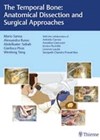
The Temporal Bone: Anatomical Dissection and Surgical Approaches
The Temporal Bone: Anatomical Dissection and Surgical Approaches does exactly what it says on the tin. It is an excellent combination of anatomical atlas and dissection manual for temporal bone surgical procedures, designed to be kept open at the benchside...
Bone anchored hearing devices in very young children
This paper presents results of BC devices in very young children and helps inform an honest discussion of risks / benefit with prospective parents. The authors of this article from Starship Children’s Hospital, Auckland, New Zealand have a series of...
Semicircular canal dehiscence and cochlear implantation
Semicircular canal dehiscence (SCD) is thought to occur in 3% of the population, it is mostly asymptomatic, but patients may present with sound-induced vestibular symptoms, low-frequency conductive hearing loss, autophony, hyperacusis and aural fulness. With the increasing utilisation of cochlear...
Moderating effect of hearing aids on association between hearing loss and brain structure?
Previous studies have suggested links between age-related hearing loss and structural changes in cortical regions with auditory and language functions, which could be causative of cognitive decline linked to the condition. The authors reason reduced sensory input could be causative...
Balloon dilatation of the eustachian tube: An evidence based review
Eustachian tube dysfunction has long provoked debate among otolaryngologists with wide-spread variation in management. Establishing a safe and effective surgical technique to bring about resolution would be of benefit to those affected, with an estimated incidence of 0.9% in the...
Nasal dermoids
This article goes through the fairly specific and unique condition of paediatric midline nasal dermoids. It goes through the epidemiology and then the embryology, reminding the reader that a protrusion of dura extends from the anterior cranial fossa through the...The PMFA Journal - December/January 2019 issue available
FEATURES IN THIS ISSUE: Life after medicine by Andrew Burd. / The creation of PlayDoh® models as an educational tool for teaching anatomy of the eyelid by Maria De Bono Agius, Roth M Manners, Fiona R Jazayeri, Christina V Miller and Sally M Webber. AND MUCH MORE...


