You searched for "Breathing"
Panos Dimitriadis: my experience of the CEORL-HNS
Many of us are invited to ENT conferences throughout the year and, as a trainee, it can sometimes be difficult to decide on which ones will be suitable for our stage in training. In this article, Amir Habeeb interviews Panos...
Early injection laryngoplasty for iatrogenic vocal fold movement impairment – a safe and effective treatment
This Ed’s Choice examines the role of early injection laryngoplasty on swallowing dysfunction and is one of a few studies available in the literature. Research on early injection laryngoplasty has been predominately focused on voice and reducing the risk of...Overcoming barriers to ear health in remote WA: partnerships and mobile care
Earbus Foundation delivers culturally safe, mobile ear healthcare to Aboriginal children across remote Western Australia, bridging access gaps. Otitis media, or middle ear disease, is highly prevalent in Aboriginal children in Australia [1]. Studies have shown that otitis media can...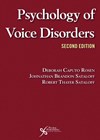
Psychology of Voice Disorders – Second Edition
Whenever I pick up a book, the first thing I do is look at the authors and see if I recognise any. The senior author of this book is Bob Sataloff – he needs no introductions when it comes to...What’s new in auditory processing?
Auditory processing disorder (APD) has had a controversial history, stemming mainly from lack of scientific rigor and accepted clinical definition. That situation is now changing. Driven by the huge number of people with unaddressed listening difficulties, basic discoveries in neuroscience,...Medical Journals and The Journal of Laryngology and Otology
Medical journals have a fascinating history. One early journal, The Lancet, was founded in 1823 and its first Editor, London surgeon Thomas Wakley (1795-1862), had a turbulent life. He lived in an era where quackery was rife and where the...
Iatrogenic vocal fold paralysis – the time to recovery
Iatrogenic vocal fold paralysis can result from stretching, compression or complete transection of recurrent laryngeal or vagus nerves. These injuries are a significant source of concern for patients and clinicians alike. The question is how long should we wait for...
Redefining alar retraction: can hyaluronic acid replace the scalpel?
Alar retraction is a common challenging nasal deformity and requires precise structural correction to achieve both functional and aesthetic harmony. Traditionally correction of alar retraction has relied on open rhinoplasty with various techniques including cartilage grafting, suturing techniques and advancement...Global health missions – not just for consultants. A guide for trainees.
Lulu Ritchie is a courageous and driven trainee in London, inspired by humanitarian missions but conscious of the usual requests for consultant level doctors. Lulu didn’t let that hold her back. She found a way and has kindly summarised her...
Which scan for children with bilateral sensorineural hearing loss? Keeping the debate going…
There have been years of debate about the appropriate imaging strategy for children with bilateral sensorineural hearing loss. For those children undergoing cochlear implant surgery, CT may provide some assistance to surgical planning, although this is not necessary in children...Hyperacusis and autism spectrum disorder
Several different auditory deficits have been found to be co-morbidities of ASD. This article reviews literature with respect to the relationship between hyperacusis and ASD. Autism spectrum disorder (ASD) can be characterised as a neurodevelopmental condition that is marked by...