You searched for "funding"
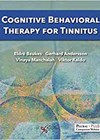
Cognitive Behavioral Therapy for Tinnitus
I was sceptical when I read that Cognitive Behavioral Therapy for Tinnitus was aimed at both clinicians and people with tinnitus. All too often, books intended for such a wide readership end up being too academic to appeal to patients...Tone deafness and perfect pitch
If you think you are tone deaf, do not despair. Singing tuition should help but it is probably too late to hope to develop perfect pitch. Consultant otolaryngologist and keen musician, Chris Aldren, discusses the complex and fascinating subject of...GP Field and the holes in his book: a British bestseller in otology
The fact that the cradle of modern otology lies in Britain and Ireland was long unrecognised in continental Europe. Yet it was the Teutonic forefathers of the ‘Vienna School’ who drew their knowledge from such British luminaries as Toynbee and...National selection: is the research section of the portfolio fit for purpose?
Applications for ENT training roles in every country require certain criteria to be met. In the UK, ST3 recruitment applications have scores allocated to research experience. In this opinion piece, the authors share their assessment of the potential issues around...Coblation tongue channelling
After uvulopalatoplasty, the tendency is to focus on the tongue base as the next anatomical area to address in the management of snoring and sleep-disordered breathing. In this article, Glen Burgess describes the technique of tongue channelling, to reduce the...4th Annual Inner Ear Disorders Therapeutics Summit
Terrri Gaskell, Chief Technology Officer, Rinri TherapueticsHeld in Boston, USA, this was an essential gathering that captured the growing excitement in both the biotech and clinical communities surrounding the rapid advancements in hearing loss therapies. With the potential to significantly...In memory of Robert Allan Yorston (10th March 1920 – 1st October 2016)
In this special feature article, Alan Gibb writes a touching tribute to his friend and colleague Dr Bob Yorston, a Dundee otolaryngologist, who had a special talent for humour and art. In addition to illustrating the eighth, ninth and tenth...Observations and ruminations - a week of collaboration and learning in Ghana
A week of surgical exchange in Ghana reveals the power of collaboration, resilience and mutual learning in advancing global ENT care. Isabelle JM Williams. Isabelle’s perspective It was a Saturday lunchtime at Heathrow airport, terminal 3. Professor David Howard, Miss...In conversation with British actress and NDCS Ambassador, Rachel Shenton
Rachel Shenton, is a passionate advocate for the Deaf community and people with hearing loss. In this interview she explains why hearing loss is an issue so close to her heart. Rachel Shenton, Actress; Ambassador for the National Deaf Children’s...Communication Disorders: a combined discipline of audiology and speech and language pathology – the Israeli perspective
Liat Kishon-Rabin provides an excellent summary of audiology training in Israel, encapsulating the development of audiology services in the country. Readers will be intrigued by the systematic approach taken to its development, and its pairing with speech and language pathology....From aaargh to zzzzz: the ABC of paediatric anaesthesia
Andrew McTavish is one of those special breeds who not only relishes complex anaesthesia, but also does so in paediatric patients. Dealing with this group of patients requires careful planning according to accepted practice, and here he discusses some recent...