
You searched for "complications"
The National Bone Conducting Hearing Implant Registry
Are you an otologist with an interest in implant surgery? Is your unit on the registry? If not, you’d better have a good excuse after reading this… What is the National BCHI Registry? The National Bone Conducting Hearing Implant (BCHI)...New technology for call clarity
O2 has carried out a proof-of-concept trial using new technology designed to improve phone calls for customers with hearing loss.In conversation with Professor John Fenton
John Fenton, Republic of Ireland, has recently been appointed President of the Union Européene Des Médicins Spécialistes (UEMS) ORL or European Union of Medical Specialists ORL Section. We caught up with him to find out a little more about his...Advances in speech testing for improved diagnosis and rehabilitation
Measuring an individual’s ability to hear speech in quiet or in the presence of background noise has long been a key component of a comprehensive audiological assessment. Moving beyond the pure-tone audiogram allows us to gain insights that extend far...Hearing loss: a challenge in Uganda
The charity, Helping Uganda Schools (HUGS), started 25 years ago. It funds the building of schools and sponsors young adults to university level. Education empowers, enhances lives and gives prosperity to countries.37th World Congress of Audiology 2026
Ebru Zeren, specialist audiologist, Mid and South Essex University Hospitals GroupSeoul proved to be a fantastic host city for this year’s World Congress of Audiology, combining rich cultural heritage with a vibrant and modern atmosphere. From the bustling streets, incredible...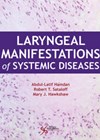
Laryngeal Manifestations of Systemic Diseases
Laryngeal Manifestations of Systemic Diseases is a unique reference manual which will cater to a wide potential audience. It would represent a good text for laryngologists coming across patients with known comorbidities or as new diagnoses of underlying pathologies, but...
Nasal septoplasty: is it more effective than medical management?
Question1. How do we know that undertaking an operation will benefit a patient? Question 2. How do policy makers / health systems know an operation is effective and ‘good value for money’? As trained professionals, we spend our careers seeking...Spotlight on Africa: paediatric ENT focus
Sub-Saharan Africa (SSA) carries 24% of the global disease burden but employs only 3% of the world’s health workers [1]. Unique workforce considerations exist in SSA including a paucity of skilled health professionals and fluctuant political climates [1,2]. Shazia Peer...Remote care apps: comparing the options
With much of the world in full or partial lockdown and social-distancing measures in full swing, the COVID-19 crisis has sparked renewed interest in remote teleaudiology services. Modern teleaudiology platforms, now offered by all major hearing aid brands, offer audiologists...


