
You searched for "Ossicular"
News from the International Vestibular Society
The executive committee of the International Vestibular Society has announced two new awards in vestibular science: one for basic and the second for clinical research. The society wishes to promote and encourage young researchers below 38, and allow the award...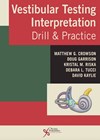
Vestibular Testing Interpretation: Drill and Practice
My overall impression of this book is that I liked it. While it reports to be designed for a trainee or junior practitioner, it may be useful for clinicians for whom vestibular conditions and testing is an area of heart-sink...
Paediatric vestibular dysfunction
This Malaysian study looked at the awareness amongst otorhinolaryngologists in the investigation and management of paediatric vestibular dysfunction. The authors noted that, although paediatric vestibular dysfunction is a common problem, there seems to be limited literature in assessing the proficiency...
Are individuals with vestibular vertigo accessing healthcare more frequently?
Vestibular vertigo is estimated to have an adult lifetime prevalence of 7.4%. Vestibular dysfunction has been linked to physical, cognitive, and psychiatric impairments. There is, therefore, a large economic burden and healthcare usage. Patients with vestibular vertigo are more likely...
Vestibular paroxysmia, diagnostic controversy clarified?
Historically, the cause of vestibular paroxysmia (VP) had been attributed to neurovascular compression of the eighth cranial despite the observation that such compression is very common in asymptomatic subjects. This paper, part of International Classification of Vestibular Disorders (ICVD) by...
Cognitive function is preserved in episodic vestibular disorders
Cognitive deficit in bilateral vestibular failure in particular, but also in unilateral vestibular failure, is well documented. The authors designed this prospective study to determine if deficits in cognition, as well as anxiety and depression, were present in episodic vestibular...Cutting burr otoplasty and conchal setback to correct prominent pinna: a ‘step by step approach’
Prominent ears can cause significant social and psychological effects on an individual. The two most common anatomical defects for a prominent pinna are an underdeveloped anti-helical fold and / or enlarged conchal bowl. In the senior author’s practice over the...Current update on vestibular and balance disorders in children
Vestibular and balance disorders in children with hearing loss often go unrecognised. This article describes the significant impact such disorders have on the various aspects of children’s development. Vestibular and balance disorders occur in the paediatric population but can go...ENT & Audiology in this issue...The Outer Ear
Emma Stapleton, MBChB, FRCS (ORL-HNS), Consultant Otolaryngologist, Cochlear Implant and Skull Base Surgeon, Manchester Royal Infirmary, UK. E: emmastapleton@doctors.org.ukTwitter: @otolaryngolofox Priya Carling, AuD,Director and Consultant Audiologist,Kent Hearing Ltd, UK. E: priya@Kenthearing.com The outer ear is, we think, the unsung hero...
DrawMD ENT
In the era of patient-centred care, one of the greatest challenges for healthcare professionals is communication with patients. Distilling years of medical / graduate school education down to a few minutes of explanation is no easy feat. DrawMD ENT is...


