
You searched for "smoking"
Superior semicircular canal dehiscence: transmastoid obliteration
Sometimes patients with dizziness turn out to have slightly more unusual causes of their problem. Thomas Milner and Georgios Kontorinis describe their technique for managing patients who have a diagnosis of superior canal dehiscence as an identified cause of their...Looking back with ENT & Audiology News roving reporter: In conversation with Professor Hesham Negm
ENT & Audiology News caught up with our long-time friend and favourite paparazzo, Professor Hesham Negm, to discuss his career and involvement with the magazine, and to view some of the fantastic photos he has taken along the way. Professor...Connected hearing healthcare: the realisation of benefit relies on successful clinical implementation
Connected hearing healthcare is the one of best tools for improving access to, as well as the overall quality, of hearing healthcare. Evelyn Davies-Venn and Danielle Glista discuss the benefits and important factors that contribute to successful implementation of this...Are you sitting comfortably? Then we shall begin
Paediatric Audiologist, Natalie Stephenson, shares her experience working with children and young people, the impact of lockdown and the value of patient-centred care, throughout the COVID-19 pandemic. Am I glad that I know The Gruffalo off by heart? Yes, I...The future of treatments for hearing and balance: a 15 and 50-year perspective
Jameel Muzaffar and Manohar Bance paint a picture of what otology will look like 15 and 50 years’ time. Will we still need doctors? Will there still be an ENT news journal? The last 50 years have seen advances including...
The ACS-NSQIP study – predictive risk factors and outcomes in primary malignant parotid tumour surgery
Malignant parotid gland tumours occupy a good proportion of the ENT surgeon’s operative caseload. Large standardised datasets for malignant parotid tumour surgery are limited. This international multi-institutional study is based on the pooled American College of Surgeons National Surgical Quality...Neuroimaging WG3. Neuroimaging as a window on the heterogeneity of tinnitus
Pim van Dijk and Sven Vanneste describe the hope that brain imaging techniques used for research will provide a better understanding of the heterogeneity of tinnitus through large-scale analysis. Their project will create a procedure whereby researchers can submit their...What is Transnasal Humidified Rapid-Insufflation Ventilatory Exchange (THRIVE)?
THRIVE is a physiological mechanism for oxygenating and ventilating patients who are under general anaesthesia and who have diminished or absent respiratory effort [1]. Classical ventilation requires bulk flow of gases into and out of the lungs driven by chest...
The development of the Paediatric Arabic Auditory Speech Test for iPad
Speech in noise testing provides real-life assessments of hearing that conventional pure tones cannot deliver. Rania Alkahtani describes the development of such a test for Arabic speaking children. It also has the additional benefit of being able to be delivered...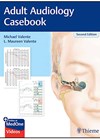
Adult Audiology Casebook (2021)
Diagnostic audiology is one of my passions so, naturally, the title of this book was an attractive proposition for the clinician in me – and I wasn’t disappointed! It is seldom that you will learn so much in both the...


