
You searched for "counselling"
Remote hearing aid fittings and maintenance – exploring applications in Africa
Introduction Technology and connectivity are allowing audiological services to be provided in novel ways. The field of telehealth, although firmly established over the past two decades, is buoyed by the continued and rapid advances in information and communication technologies. Remote...Detecting postoperative cholesteatoma with diffusion weighted magnetic resonance imaging
Middle ear cleft cholesteatoma is an inflammatory disease that erodes local bony structures and can cause otorrhea, hearing loss, vertigo and intracranial complications. It is usually treated with surgery, typically canal wall up (CWU) or canal wall down (CWD) surgery....Hearing care systems – European examples
In this article, Vice President of the European Federation of Hard of Hearing, Lidia Best, explores the drivers for improvement and change in European hearing care systems. In 2010, the European Committee for Standardization (CEN) issued the EN-15927 European Standard...Genetics WG4. Improving diagnosis and drug development through the genetic understanding of tinnitus subtypes: a TINNET endeavour
Christopher R Cederroth and Jose Antonio Lopez-Escamez explain how progress is being made to investigate the contribution of genetic factors to tinnitus, including a subtype of ‘extreme’ tinnitus in Ménière’s disease. Genetics WG4 is working towards determining the genetic basis...
Paroxysmal downbeating nystagmus and proton pump inhibitors
This case report highlights the effect of long-term use of proton pump inhibitors on the vestibular system. The authors reported a case of a 70-year-old woman who was admitted with delirium, ataxia, slurred speech and slowness of thought. She had...Clinical guidance: using the NAL-NL3 Fitting System in practice
NAL-NL3 modernises hearing aid prescription with modular, evidence-based modules, improving real-world comfort and communication for diverse listening needs. Hearing aid prescription has long relied on a single, audiogram-based formula to guide amplification. While this approach has delivered reliable outcomes for...
Scott-Brown’s Essential Otorhinolaryngology, Head and Neck Surgery
The three-volume Scott-Brown’s Otorhinolaryngology Head and Neck Surgery is arguably the definitive encyclopaedia of ENT. Its comprehensive nature, however, limits its utility when preparing for examinations. The authors, in creating an “essential” version, have managed to produce an ideal textbook...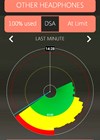
How loud is too loud? Smart ways to monitor noise exposure through your headphones
As an audiologist, an increasingly common concern patients have is noise exposure from their headphones and how it will impact their hearing over time. It’s a legitimate worry considering the average adult is streaming audio content on their mobile devices...
Voice outcomes following extended laser resections for laryngeal cancer
It is now widely accepted that the oncological and voice outcomes following transoral laser microsurgery for early T1a glottic cancers are equivalent to, if not superior to, traditional radiotherapy. Voice outcomes following more extensive resections have not been as frequently...
How to train adults with single-sided deafness and cochlear implants
Cochlear implantation (CI) in patients with single-sided deafness (SSD) has been carried out in Perth, Australia from 2008. It poses challenges to clinicians and patients who are trying to tune in the poorer ear while still having a normally hearing...
What to do if adenotonsillectomy does not cure sleep apnoea in children?
This article reviews the management of children with persistent obstructive sleep apnoea (OSA) following adenotonsillectomy (AT). Risk factors for patients to have persistent disease include obesity, being Afro-Caribbean and existing co-morbidities such as craniofacial and neuromuscular disorders. Initial assessment of...


