
You searched for "reinnervation"
Achieving consensus on candidacy for cochlear implantation
The British Cochlear Implant Group’s candidacy working group recently ran a national exercise, working towards a consensus on candidacy for cochlear implantation in the UK. Padraig Kitterick and Debi Vickers were instrumental in this exercise, and in the article below,...Making the case for multidisciplinary ENT vasculitis clinics
How can combined ENT vasculitis clinics improve diagnosis, treatment and ongoing care for patients with AAV? This article outlines a multidisciplinary approach. Antineutrophil cytoplasmic antibody (ANCA)-associated vasculitides (AAV) are a group of rare autoimmune conditions characterised by inflammation of small-...Directed audio pointing the way to a great listening experience – HyperSound Clear<sup>TM</sup>
In this Spotlight on Innovation we explore an innovative ultra-thin speaker system compatible with TVs, which can be programmed by a hearing professional to a listener’s hearing profile and preferences to deliver a directed 3D listening experience. Whether your patients...Nasal sidewall reconstruction
Expert reconstruction of nasal sidewall defects requires careful selection of techniques across nasal layers, balancing aesthetics, structural support and patient needs. When reconstructing a nasal skin defect, a variety of factors should be taken into account in order to achieve...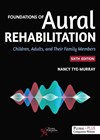
Foundations of Aural Rehabilitation: Children, Adults and Their Family Members – Sixth Edition
This book provides a plethora of information relating to aural rehabilitation. The author has taken a multi-faceted approach, combining firm evidence-based perspectives with an evaluation of the scientific foundations of current clinical practises. This book is mainly aimed at those...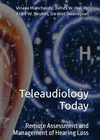
Teleaudiology Today: Remote Assessment and Management of Hearing Loss
The Covid crisis saw many audiology services, private and public, scramble to find other methods of continuing to deliver services to new and existing patients/clients. This textbook builds on international research that the authors published during that time and the...
International classification of BPPV
In the past few years, the Bárány Society has made great strides in defining and classifying vestibular disorders along the lines of the international classification of diseases. This article addresses the diagnostic criteria for BPPV, the commonest cause of vertigo....
Differences in timbral cues’ perception between teenagers with cochlear implants and those with normal hearing
The authors aimed to assess timbral cues’ perception of teenagers with cochlear implants and compare it to the respective perception of normally hearing teenagers. Thirty-four teenagers were included in the study, nine Korean adolescents with cochlear implants and 25 adolescents...
Relationship between ART and language development
Assisted Reproduction Technology (ART) and especially more invasive techniques of ART may be associated with an increase in neurodevelopmental problems including language delay. Some studies have reported slightly worse perinatal outcomes of IVF babies compared to naturally conceived babies. The...
Macrolinguistic assessment in early Alzheimer’s disease
Deficits in language production like word finding difficulty, and lexical-sematic impairment have been documented early in the course of Alzheimer’s disease (AD). According to the authors, the current language assessment methods used in AD patients do not account for macrolinguistic...
Tinnitus loudness and insomnia
Tinnitus may be very bothersome for its sufferers, in some cases leading to suicide. Therefore, it is extremely important to offer the best available treatment to people suffering from tinnitus. This study considered whether insomnia may be associated with the...


