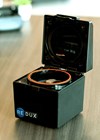
Moisture is one of the most common reasons hearing aids malfunction. Whether it is because a patient forgot to take off their hearing aids before jumping in the swimming pool, they wear their hearing aids while working out or they...
Sue Archbold reviews the fascinating life of Edith Whetnall and traces her influence on audiology from the mid-20th century to today’s practices. It’s a pleasure to be asked to write about Edith Whetnall for this edition of ENT & Audiology...
1 March 2014
| Irfan Khan, Bhaskar Ram, Kim Ah-See (Prof)
|
ENTA - Rhinoplasty
Introduction Good exposure is an essential requisite in open rhinoplasty and often requires appropriate assistance to aid surgery. Frequently, surgeons lack adequate assistance in theatre and often have to depend on the scrub nurse for retraction. A self-retaining retractor is...
(CHI) is leading on the clinical and operational transformation of acute paediatric healthcare and consists of hospitals at Crumlin, Temple Street and Tallaght as well as an Urgent Care Centre at Connolly hospital in Blanchardstown.
Over the last few decades, rhinology has been one of the most dynamic and progressive areas of ENT. Professor Fokkens is perfectly placed to offer insight into the future possibilities that could transform our patients’ care, many of which are...
In the field of laryngology, perhaps more than in any other area of ENT, there has been a philosophical shift (as well as a technological one) in the approach of clinicians caring for patients. Albert Merati explains. Progress in laryngology...
What does the future hold for ENT surgeons in the UK? Leaders of our specialty aim to provide insight based on current guidance and personal experience. The programme will be of interest to anyone wishing to gain an insight into...
Body dysmorphic disorder is a serious psychiatric condition that we all need to be aware of when contemplating aesthetic surgery. It can present in children as well as adults. Prof Vieira and Dr de Carvalho discuss the tell-tale signs and...
1 July 2014
| Jo Williams, Kim Ah-See (Prof)
|
ENTA - ENT
The range of nasal and aural foreign bodies that present to accident and emergency (A&E) departments, emergency rooms and minor injury units is limited only by the imagination. Aetiology and epidemiology statistics point to patients being predominantly children in the...
The 38th PanAmerican meeting will be full of innovative lectures and sunny afternoons. It launches with three pre-meeting workshops on 15 June: cochlear implants, in conjunction with the International Federation of Otolaryngology Societies (IFOS); Botox injections and facial contouring; and...
The KUDUwaveTM was designed to replace the need for a sound booth and enable truly portable audiometry in almost any environment. ENT & Audiology News’ own Gareth Smith, Priya Carling and Alex Griffiths Brown met in London to put the...
Transoral robotic surgery is now a well-accepted technique in malignant tumours of the tongue base. Here the team from St Mary’s and the Royal National Throat Nose & Ear Hospital in London describe its use in carefully selected patients with...