You searched for "registration"
In conversation with Prof Helge Rask-Andersen: on cell regeneration and treatment of human deafness
Helge Rask-Andersen, head of the inner ear research laboratory at the University of Uppsala in Sweden, has many achievements to his name. He was made an Honorary Member of ENT UK earlier this year. Gerry O’Donoghue caught up with him...
The electromagnetic larynx
Current treatment options for a bilateral vocal cord palsy (tracheostomy, posterior cordotomy, arytenoidectomy) are suboptimal, with a focus primarily on a static means of airway restoration at the expense of voice production and potentially swallow safety. This paper reports on...Smart cochlear device: how biosensors could revolutionise hearing care
Smart cochlear implants could monitor inner ear health, deliver drugs and adapt in real time, merging biosensing, microfluidics and personalised hearing care. From passive hearing aids to smart implants Hearing technology has advanced dramatically over the last few decades, yet...Virtual educational outreach in the COVID-19 era
Existing surgical outreach programmes to developing countries have been severely curtailed by the COVID-19 pandemic. This has impacted on opportunities for otolaryngologists from the USA and from other developed countries to contribute to education and training of otolaryngologists in developing...Anaesthesia for excision of vestibular schwannomas
The ‘shared airway’ relationship between ENT surgeons and anaesthetists is well documented. But ENT surgery and anaesthesia interact in numerous other ways, particularly in complex skull base surgery. What do our anaesthetic colleagues want us to know about vestibular schwannoma...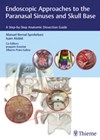
Endoscopic Approaches to the Parsanasal Sinuses and Skull Base
This is an excellent book to cover the endoscopic approaches to the paranasal sinuses and skull base with a step-by-step anatomic dissection guide. The editors are a group of eminent skull base otolaryngologists and neurosurgeons in Barcelona, Spain, and they...The British Endoscopic Ear Group - Inaugural Meeting
Haseem Raja, ENT Registrar, North West DeaneryRachel Edmiston, ENT Consultant, Northern Care Alliance NHS Foundation Trust and BEEG course faculty.The inaugural meeting of the British Endoscopic Ear Group (BEEG) was a resounding success, bringing together a sold-out audience of surgeons...