
You searched for "Usher"
Implants and the identity of self
Hearpeers is MED-EL’s international community for people with hearing implants and those considering getting a hearing implant, as well as their families and friends. This group enables people to connect with hearing implant recipients from around the world to learn...Why and how to assess digital literacy of older adults with hearing loss
Assessing digital literacy in older adults with hearing loss is vital for equitable care. The new DL-2Q tool quickly measures such skills, ensuring tailored support and better outcomes. Digital literacy and its importance When an older patient walks into your...Sound Sensation music festival
Alex Griffiths-Brown heads to Austria to hear MED-EL showcasing music by and for hearing implant users.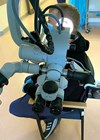
MicroREC Optical System
The MicroREC is a product by Custom Surgical, a German medtech company, and works as an attachment for an operating microscope to enable procedures to be viewed and recorded on a smartphone. It’s advertised as a device used in ENT,...Standards for Safe Listening – how they align and how some differ
The ‘Make Listening Safe workgroup’ is an initiative of The World Health Organization (WHO) in the framework of the World Hearing Forum and is committed to creating a world where nobody’s hearing is put in danger due to unsafe listening....Enhancing and extending hearing care using Ida Telecare
Tele-audiology has been on our radar for a long while, and evidence shows that its application in clinical practice is beneficial to both patients and clinicians. Cherilee Rutherford discusses the benefits and gives an overview of the freely-available tools developed...In conversation with Professor David Kemp
Ted Killan, Vice-Chair of the British Society of Audiology (BSA), caught up with Professor Kemp to discuss his scientific journey over the past 40 years, and what we can expect from OAEs in the future. Prof David T Kemp. In...Exploring teenagers’ access and use of assistive hearing technology
Children require good signal-to-noise ratios for optimum listening and learning. The use of remote microphone technology can be of benefit, yet older children often resist using it. Jennifer Groth reviews the challenges facing older children in the use of remote...
Stimulation for a good night’s sleep
This article was an interesting read. It is an update from the authors’ original paper printed in the NEJM in 2014 regarding the results of an implantable pulse generator (IPG) for stimulating the hypoglossal nerve in response to respiration. This...
Soft tissue changes following maxillary osteotomy, comparison of three computer programmes
This small group of seven patients had a Le Fort I advancement maxillary osteotomy with vertical repositioning and alar base cinch sutures. They were assessed with cone beam CT’s three months preoperatively and one year postoperatively. A clinical comparison between...
Soft tissue changes following maxillary osteotomy: comparison of three computer programmes
This small group of seven patients had a Le Fort I advancement maxillary osteotomy with vertical repositioning and alar base cinch sutures. They were assessed with cone beam CT’s three months preoperatively and one-year postoperatively. A clinical comparison between the...


