You searched for "cortical"
Global CI Collaborative: Futures Forum - Webinar Series July 2020
In July 2020, the Global CI Collaborative launched a series of webinars to highlight the challenges and learnings COVID has brought to the cochlear implant world. COVID has changed healthcare practice globally, requiring rapid service reconfiguration and novel pathways to deliver cochlear implantation for all ages...Nottingham hearing experts launch CHEAR (COVID and hearing) study
Researchers based in Nottingham are launching an in-depth and ongoing study into the possible effects of COVID-19 on patients’ hearing, tinnitus and balance. The CHEAR (COVID and hearing, otherwise known as ‘Measuring Hearing, Tinnitus and Balance following COVID-19’) Study will...From the editor MayJun 2021
Declan Costello, MA, MBBS, FRCS(ORL-HNS), Editor, ENT & Audiology News; Consultant Ear, Nose and Throat Surgeon, Wexham Park Hospital, Slough, Berkshire, UK. E: d.costello@nhs.net ENT & Audiology News is truly part of a global family of ENT surgeons and audiologists,...From the editor JulAug 2021
Declan Costello, MA, MBBS, FRCS(ORL-HNS), Editor, ENT & Audiology News; Consultant Ear, Nose and Throat Surgeon, Wexham Park Hospital, Slough, Berkshire, UK. E: d.costello@nhs.net It’s rare that one of our five senses hits the headlines and touches the public consciousness,...Breaking the menstrual and menopause taboo
The impact of menstruation and menopause on doctors and surgeons is the subject of a provocative new podcast. As ENT & Audiology News reported in July 2021, WENTS & Friends is a mouthpiece for Women in ENT Surgery UK, an organisation aiming to support women in all stages of training. The third episode lifts the lid on the lack of care, provision and policy for this central aspect of women’s health.Ida Institute tackles clinician burn-out
Founded in 2007, Denmark’s Ida Institute is dedicated to the health of people with hearing loss. Its new four-part course, however, is aimed at another group: the medical professionals whose jobs can compromise their own health.ENT in this issue...BACO 2023
Declan Costello, MA, MBBS, FRCS(ORL-HNS), Editor, ENT & Audiology News; Consultant Ear, Nose and Throat Surgeon, Wexham Park Hospital, Slough, Berkshire, UK. E: d.costello@nhs.net BACO (the British Academic Conference of Otolaryngology) has been running regularly since its inception in Oxford...RSM Laryngology & Rhinology: the year ahead
As the president of the RSM’s Laryngology & Rhinology Section for the 2022-23 academic year, my aim is to centre the education programme around our trainees, with a real emphasis on inspiring the future generation of ENT surgeons.ENT specialist honoured in Uzbekistan
Italian ENT specialist Professor Desiderio Passàli was awarded an honorary professorship in April by the Ministry of Health of the Republic of Uzbekistan. The honour was conferred at an event on 18 April in Samarkand State Medical University by the...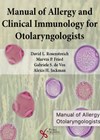
Manual of Allergy and Clinical Immunology for Otolaryngologists
As a first approach, the book impresses with the hardback cover and the glossy 442 pages. Published in March 2015, the book reflects an effort to deliver the main advances and updates of allergy and clinical immunology relevant to otolaryngology...
International classification of bilateral vestibulopathy (BVP)
In the past few years the Bárány Society have been standardising the diagnostic criteria for various vestibular disorders – International Classification of Vestibular Disorders (ICVD). Diagnosis of BVP relies on history, bedside clinical assessment and objective vestibular tests. The authors...