
You searched for "assessment"

Assessment and management of dysphagia in the elderly
This article covers dysphagia in older patients, which is an important topic due to an ageing population, and a relatively common symptom that we see in clinic. Dysphagia could be due to presbyphagia secondary to changes in head and neck...MDT assessment of children and adults with implantable acoustic devices (IADs)
Abi Asher, Clinical Lead for the IAD programme in Cambridge describes how hearing care professionals work together to make the best recommendation for the patient, in turn helping navigate through the various devices now on offer. Multidisciplinary teams (MDTs) are...
Is it really working? Assessment versus real-life language measures
Research in the field of language treatment and rehabilitation to date has used single-word naming as a controlled measure of outcome. Yet, given people do not actually communicate in single words, there is much debate as to whether this approach...Clinical WG1. Establishing a standard for tinnitus: patient assessment and characterisation
Rilana Cima and Haúla Haider introduce an ambitious pan-European collaboration that seeks to establish guidelines for achieving best clinical practice for managing, assessing and treating patients with different tinnitus profiles. Tinnitus heterogeneity is the major reason for inconsistent results in...
Association between dysphagia and sarcopenia: implications for assessment of older people
The onset of swallowing difficulties with progressive age is reported to occur in 13-35% of the elderly population. Sarcopenia is characterised by a decrease in muscle mass, strength and function. Sarcopenic dysphagia is a relatively new term. Its prevalence is...
Assessment of temporal bone skills on 3D-printed temporal bones – a useful training curriculum?
The authors contend it is now archaic to follow Halstead’s model of surgical training, namely ‘see one, do one and teach one’. Simulated training is now widely used in many surgical specialities. With every surgical trainee having an individual learning...Task shifting in public hospital rhinology new patient assessment
Nurse-led rhinology clinics and CBCT imaging streamline assessment, improve equity and expand capacity in a resource-constrained public hospital setting. In the ENT department at Waikato Hospital, New Zealand, we have faced problems that are no doubt well known to many...Facing up to the challenge of behavioural observation in infant hearing assessment
The ability to assess detection and discrimination of speech by infants has proved elusive. Dr Iain Jackson and colleagues discuss how new technologies and fresh approaches might offer valuable insight into young infants’ behavioural responses to sound. The limits of...
Classification and assessment of midfacial fractures; no more Le Fort facial fractures
There is some evidence that severe or complex midfacial or orbital fractures have declined over the last decade. Interestingly there is also evidence of an increase in road traffic accidents but a decrease in facial injuries. This is possibly attributed...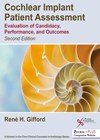
Cochlear Implant Patient Assessment: Evaluation of Candidacy, Performance, and Outcomes – Second Edition
The second edition of Cochlear Implant Patient Assessment aims to become a point of reference for all professionals involved in assessing cochlear implant candidacy and interested in broadening their knowledge to maximise the hearing capabilities of their patients. This book...
Does frailty lead to changes on quantitative measures of videofluoroscopic swallowing assessment?
In recent years, studies have considered the relationship between frailty and swallowing and demonstrated that decreased skeletal muscle mass correlates with decreased swallowing function. This study investigated this relationship by using quantitative measurement of three individual components of swallowing assessed...


