You searched for "wound"
Seven things ENT surgeons can learn from the hairdressers
In a nod to our origins as barber surgeons, Australian ENT surgeon and blogger Eric Levi gives us an entertaining insight into what he has learned from his hairdresser that makes him a better doctor. I’ve been to the hairdressers...What’s new in electrophysiology?
Steve Bell is a lecturer at the University of Southampton and a member of the British Society of Audiology’s (BSA) Special Interest Group in Electrophysiology. Given the current surge in interest in electrophysiology, both in rehabilitation and diagnostic arenas, Steve...2020 Unmasked - By Vedika Dhunnoo
Over decades, humankind has vied to reach new heights of development. Yet, despite the unparalleled advances, in this frenzy, mankind has lost itself. 2020 marks the turning point; the year that unmasked the lessons of the past, the ones forgotten...The (Ancient Egyptian) ear that hears badly: otology in Ancient Egypt 1500 BC
The Ebers Papyrus was written around 1500 years before the birth of Christ, and is arguably the most complete and most beautiful of the medical texts to have survived from ancient Egypt. It was purchased from a Coptic antiquarian in...Head and neck cancer multidisciplinary team
Why do we have MDTs? Do they make a difference to outcomes? Jon Bernstein explores the whys and wherefores of the head and neck cancer MDT, and wonders where things might go from here… Head and neck (upper aerodigestive tract)...Cochlear implantation in the developing world: perspectives from the Indian subcontinent
Cochlear implants are an expensive technology, yet profound hearing loss is far from a developed-world phenomenon. On the contrary, incidences of both congenital and acquired hearing losses are high in the developing world. This article explains how an initiative in...Robert Vincent: otologie sans frontières
Chris Aldren speaks to French ear surgeon Robert Vincent who’s particularly proud of forming a global otologist network providing free resources for education and patient care worldwide. Robert Vincent Robert, who have been your otological mentors? I did my initial...Robert Vincent: otologie sans frontières
Chris Aldren speaks to French ear surgeon Robert Vincent who’s particularly proud of forming a global otologist network providing free resources for education and patient care worldwide. Robert Vincent Robert, who have been your otological mentors? I did my initial...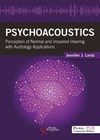
Psychoacoustics: Perception of Normal and Impaired Hearing with Audiology Applications
The field of psychoacoustics and the practice of audiology have always been curious bedfellows. In the clinic, we commonly assess patients’ hearing ability through pure-tone detection, a classic psychoacoustical phenomenon, but just one of the many, many ways in which...Virtual Voices sing out
The search is on for musicians with a hearing implant to be part of an online collaboration. The Virtual Voices and Band project is inviting hearing implant users of all types, countries, abilities and brands to unite by recording a vocal or instrumental performance of Beethoven’s Ode to Joy.