
You searched for "studies"
Getting to grips with acoustic trauma
Our understanding of hearing loss caused by noise exposure to those in the armed forces is growing in interest and understanding. Research at a cellular level is essential to increase our understanding so that we can better diagnose, manage and...Continuous intraoperative neural monitoring and thyroid surgery
Continuous intraoperative neural monitoring enhances thyroid surgery safety, helping predict and prevent recurrent laryngeal nerve injury in real time. Recurrent laryngeal nerve (RLN) injury with resultant vocal cord paralysis (VCP) can have a significant impact on patient quality of life...A medical student’s perspective on the future of obstructive sleep apnoea management
Obstructive sleep apnoea remains an immensely challenging condition to treat. Many treatments have been used over the years, but no single management strategy has proven significantly better than the others. We hear about some technological innovations in the field of...Monkey business
Professor Sir Donald Harrison (DFNH) had a strong interest in comparative anatomy of the larynx, which was supported by a close relationship with the London Zoo who provided specimens from any mammals in the collection that died and had undergone...Rask-Andersen made honorary member of ENT UK
The inner-ear research laboratory at the University of Uppsala in Sweden has a long tradition of ear research. The department has been linked to such legendary names as Barany (Nobel Laureate), Nylen and Stahle. Now, the head of that department, Professor Helge Rask-Andersen, has been awarded honorary membership of ENT UK.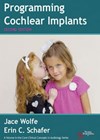
Programming Cochlear Implants - Second Edition
Wolfe and Schafer open their second edition with up-to-date images of brand-specific devices and show various configurations and customisations available to the recipient. For the audiologist, they introduce highly relevant topics such as polar plots for microphones, array types and...
Cochlear implantation in asymmetric hearing loss
Criteria for cochlear implantation (CI) is a constant topic of debate. The UK traditionally had relatively restrictive guidance, although this has been greatly improved by more recent guidance released in 2019. Nevertheless, because of the lack of evidence for cost-effectiveness,...
Biologics for deafness
Cochlear implants and hearing aids are inherently limited in their ability to restore ‘natural’ hearing. Biological therapy to treat inner ear pathology still is evolving rapidly with several ongoing clinical trials, though none are available for clinical practice to date....


