
You searched for "palsy"

4917 results found

Top ten research priorities for dementia and hearing loss

Researchers from Nottingham working with Alzheimer’s Research UK and RNID (the Royal National Institute for Deaf People) asked people living with these conditions, as well as their families and clinicians, what future research would have the biggest impact for them.


Virtual chromoendoscopy (VCE)

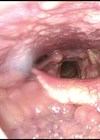
‘That’s a funny looking lesion on the larynx, it’s probably benign, but I should take a biopsy.’ Liz Ross and Ajith George discuss whether virtual chromoendoscopy will change this thought process. What are the origins and ENT applications? Traditional chromoendoscopy...

Clinical leadership and management: developing world ENT

I have been asked to share some of the initiatives I have been involved with to address ENT-related challenges in Africa and the developing world. Developing countries constitute the majority of the world’s landmass (Figure 1), are home to >50%...

Hidden genetic disorders in children that may present to the otolaryngologist

Background Among the many hundreds of children presenting to the otolaryngology clinic are a few whose symptoms are due to an underlying genetic condition. In most cases the underlying syndrome is obvious and has already been diagnosed, such as the...

What’s in a name?

Kate Granger is a doctor and the founder of the #hellomynameis campaign; she is also a cancer patient. In this article she explains why she started the campaign, and why patient-centred care starts with an introduction. Chris and me the...

Exploring teenagers’ access and use of assistive hearing technology

Children require good signal-to-noise ratios for optimum listening and learning. The use of remote microphone technology can be of benefit, yet older children often resist using it. Jennifer Groth reviews the challenges facing older children in the use of remote...

Audiological evaluation and management of teenagers with tinnitus

There is a growing interest in investigating, understanding and managing tinnitus in children and adolescents, with several articles on the subject published in journals over the last year. Brian Fligor describes the approaches to consider when discussing tinnitus with teenagers....

Andrew Foster and deaf education

This article examines the career of deaf African American, Andrew Foster, and his contribution to deaf education in Sub-Saharan Africa. The history of medicine has often been guilty of attributing great revolutions to a single person (usually a white man)...

Bringing ear care and hearing services to the hardest to reach: the potential of primary healthcare workers

Can workers from the local community plug the workforce gap in providing ear and hearing care? Bringing ear and hearing care services closer to the community remains a key component of reducing the burden of ear and hearing conditions across...

Promoting human rights of deaf communities in low-resource settings

Stigma and misconceptions about deafness are serious impediments for many deaf people to realise rights and potential in some of the most challenging situations globally. Around 430 million people are estimated to live with moderate or higher levels of hearing...

Outreach to build capacity for surgical ear care in low-resource settings: challenges and opportunities

There are successful models for delivering complex ear surgery where resources may be more limited. Ear, nose and throat conditions are frequently overlooked when global health issues are considered, but hearing loss is the world’s most common sensory deficit, and...

Barrier and opportunities for hearing care: finding a way forward for all

Ideal models of care for communities can include tailored ear and hearing care interventions. Barriers exist at an individual and societal level to realise the vision of hearing care for all, regardless of country or resource setting. Affordability of hearing...
