
You searched for "America"
Prednisolone and/or acyclovir for Bell’s palsy
Landmark Paper: Sullivan FM, Swan IRC, Donnan PT, et al. Early treatment with prednisolone or acyclovir in Bell’s Palsy. N Engl J Med 2007;357(16):1598-607. Facial nerve paralysis as a consequence of Bell’s palsy can result in devastating long-term effects on...Demystifying laryngology in the era of examination and collaboration
In the field of laryngology, perhaps more than in any other area of ENT, there has been a philosophical shift (as well as a technological one) in the approach of clinicians caring for patients. Albert Merati explains. Progress in laryngology...Paediatric vestibular evaluation
Richard E Gans is a renowned expert in the areas of vestibular evaluation and rehabilitation techniques. In the first of two articles (see here for the second article), Dr Gans gives an overview of the approach he and his team...World Hearing Day 2023
The World Health Organization (WHO) is to launch a training guide on 3 March 2023 to mark this year’s World Hearing Day.Reza Band<sup>®</sup> UES Assist Device
Members of the ENT and Audiology News team spoke to Rose Henrichs, Solutiones Vobis and Nick Maris, CEO and President of Somna Therapeutics about the Reza Band device. Nick Maris. Rose Henrichs. What is your involvement in Reza Band? And...SEQaBOO: SEQuencing a Baby for an Optimal Outcome
There are at least 15 countries now running genome sequencing projects. The team in Manchester, UK, and Boston, USA, share their SEQaBOO project. Abstract SEQaBOO (SEQuencing a Baby for an Optimal Outcome) will transform newborn hearing screening (NBHS) by bringing...
Otology, Neurotology and Skull Base Surgery Book Review
This concise pocket-sized textbook aims to provide a practical reference that clinicians can use in every day otological and skull base practice. The senior author, Derald Brackmann, is one of the leading neurotologists of the modern era and, together with...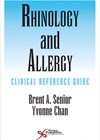
Rhinology and Allergy: Clinical Reference Guide
This pocket-sized book aims to provide a clinical reference guide through a series of review chapters. The editors, Brent A Senior and Yvonne Chan, have produced a comprehensive text through the work of predominantly North American and Canadian co-authors of...
Is Dymista® useful for paediatric allergic rhinitis?
Allergic rhinitis (AR) affects up to 14.6% of the paediatric population. Whilst a recent Cochrane review has considered the evidence for intranasal corticosteroids as `weak and unreliable’ in paediatric AR, this product is a novel formulation combining Fluticasone and Azelastine...
Lost and sound: exploring hyperbaric oxygen therapy for refractory SSNHL
Can hyperbaric oxygen therapy (HBOT) offer a breakthrough for patients with refractory sudden sensorineural hearing loss (SSNHL)? SSNHL is defined as acute hearing loss of ≥30 decibels in three consecutive frequencies within three days. Typically, it’s treated with two weeks...


